Most stores treat the size chart like a reference page, something a shopper checks if they remember to. In practice it's the actual decision point for the sale. A shopper who isn't sure what size to buy doesn't always leave a review about it. Often they just leave, or they order two sizes and turn one into a return either way.
A shopper who trusts their size buys once, keeps it, and comes back. A shopper who doesn't either abandons the cart or orders extra sizes to sort it out at home, and one of those sizes becomes a return regardless.
Sizing doubt shows up as a stalled cart, not a support ticket.
According to Baymard Institute, general ecommerce cart abandonment already runs upward of 70%, and fit-driven categories like apparel skew even higher, since a shopper can be sold on the product and still stop at the size field. The uncertainty doesn't split evenly either, which is part of why a static chart struggles to fix it on its own.
A size chart and a size quiz aren't solving the same problem
| Approach | Setup effort | Accuracy | Effect on returns | Effect on checkout |
|---|---|---|---|---|
| Generic size chart | Already exists | Same chart for every body | Fit stays the top return cause | Shopper self-sorts, or doesn't |
| Fit Quiz Size Recommender | A few guided questions | Matched to the shopper, not the garment alone | 10-30% drop on covered SKUs | A specific size, with a reason to trust it |
A shopper who finishes the quiz is already a different kind of visitor.
Completing a quiz is itself a signal of intent, and the conversion gap that follows is large enough that it shows up in almost every guided-selling benchmark, sizing included.
Keep a fit quiz flow to eight questions or fewer. Asking more leads to lower completion and the drop-off is sharp. Every question should be one shoppers can answer at a glance, on the go, without guessing, measuring themselves, or spending time on anything but a simple choice.
Ask fit questions, not demographic ones
Height, usual size, and fit preference tell the algorithm more than age or gender ever will.
Give shoppers a clearer sense of why the size was recommended
Adding context around the recommendation builds confidence in the result.
Route straight from result to cart
The result page is warm intent. Every extra click between the answer and the add-to-cart button is a chance for the doubt to creep back in.
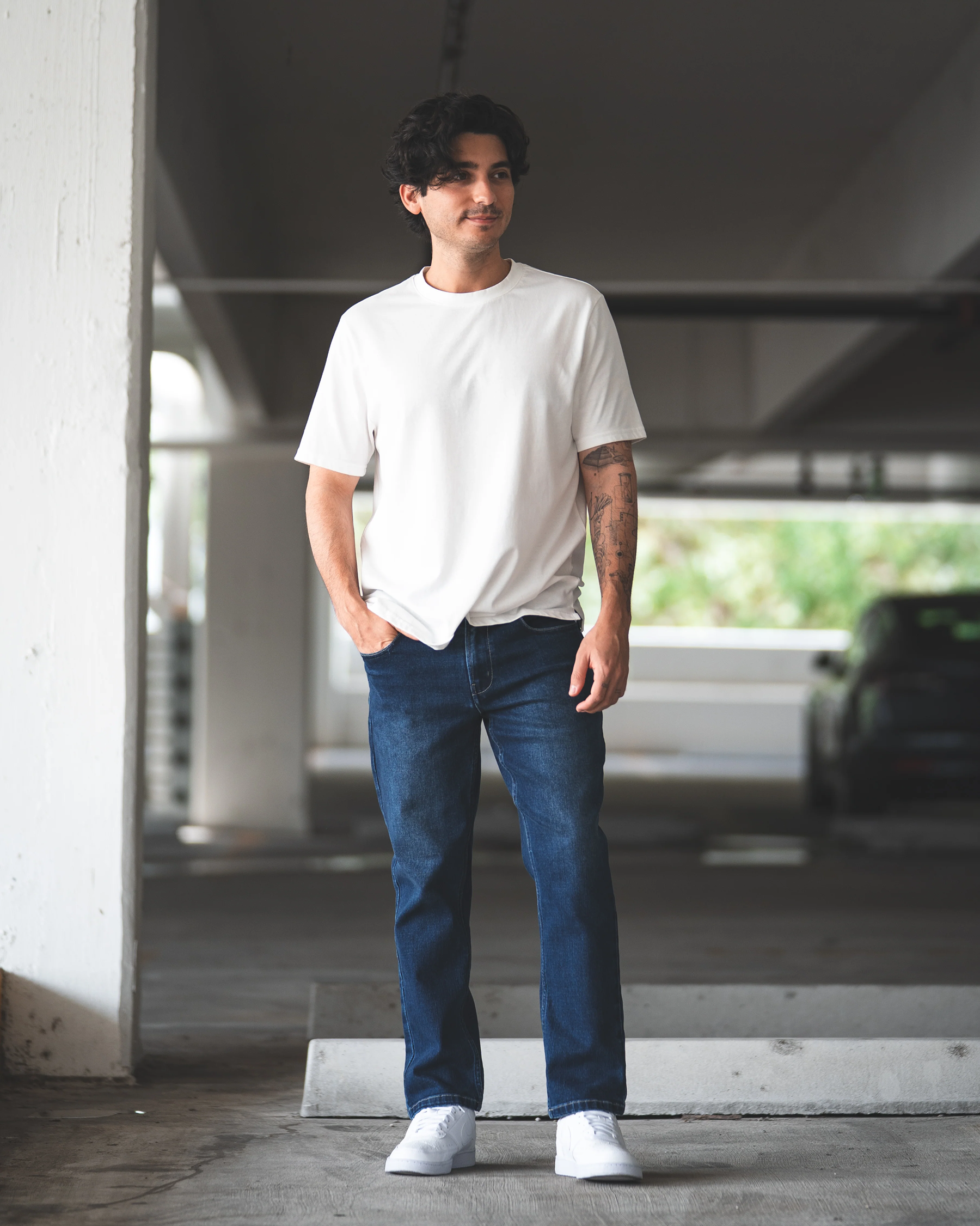
How Under 5’10 reduced returns by 30% with Fit Quiz
Menswear brand Under 5'10 used Fit Quiz to guide size decisions before checkout without adding support strain or forcing shoppers to measure themselves.
By asking about usual pant size, fit preference, height, and hip and seat shape, the quiz recommends both size and inseam length, cutting returns by 30%.
Unlike a regular size chart, which asks shoppers to compare numbers against a garment they can't try on, Fit Quiz weighs how consistent their usual size is and their preferred fit — so the recommendation matches the person, not just the product.
A tape measure and a bathroom scale aren't as reliable as they look.
Most size tools ask for an exact measurement or a body weight, on the assumption that those numbers hold still. Neither one does, and a self-reported number moves around even more than a measured one.
Why a measurement moves more than people think
The breathe factor
A normal inhale versus an exhale can shift a bust or waist measurement by 1 to 2 inches, 2 to 5 centimeters, before anyone's even picked up the tape.
Tape tension
Pull the tape even a little and it compresses soft tissue, which reads smaller than the true size. Leave it a bit loose and the number inflates the other way.
The leveling illusion
Keeping a tape perfectly level around a curved body is genuinely hard to do without someone else checking it. A tape that tilts even slightly reads larger than the real measurement.
Weight isn't a fixed number either
A reported weight carries the same instability, plus a second layer of bias, since people are reporting from memory rather than a scale in front of them.
That's the reasoning behind Fit Quiz Size Recommender not asking for a measurement or a number on a scale. It asks about fit the way a person actually experiences it, how a similar piece fits today, rather than what a tape or a scale would say under conditions that rarely hold.
Fewer size-related returns put margin and trust back into the business.
Every return avoided is margin that doesn't get eaten by reverse shipping, and every correct-on-the-first-try order is a small deposit into whether that shopper buys again.
Run the math on what a return actually costs
A store doing 2,000 apparel orders a month at a 25% return rate is processing 500 returns. If 60% of those trace back to fit and a quiz cuts that share by 20%, that's 60 fewer returns a month. At $30 average cost per return, that's about $1,800 a month back in margin. Those same 60 avoided returns also skip roughly 5 kg of transport emissions each, the reverse shipment itself running about 30% higher than the original delivery, so the fit conversation carries a real sustainability line alongside the margin one, not a separate pitch.
Keep the quiz above the fold on the product page
A quiz a shopper has to scroll to find gets skipped by the same shoppers who'd benefit from it most.
Resurface it at cart, not just the PDP
Someone who added a size without taking the quiz first is still a candidate for a second look before checkout.
Don't gate email before the result
Apparel is a low-consideration category for this kind of gate. Asking for an email before showing the size tends to lose more shoppers than it captures.
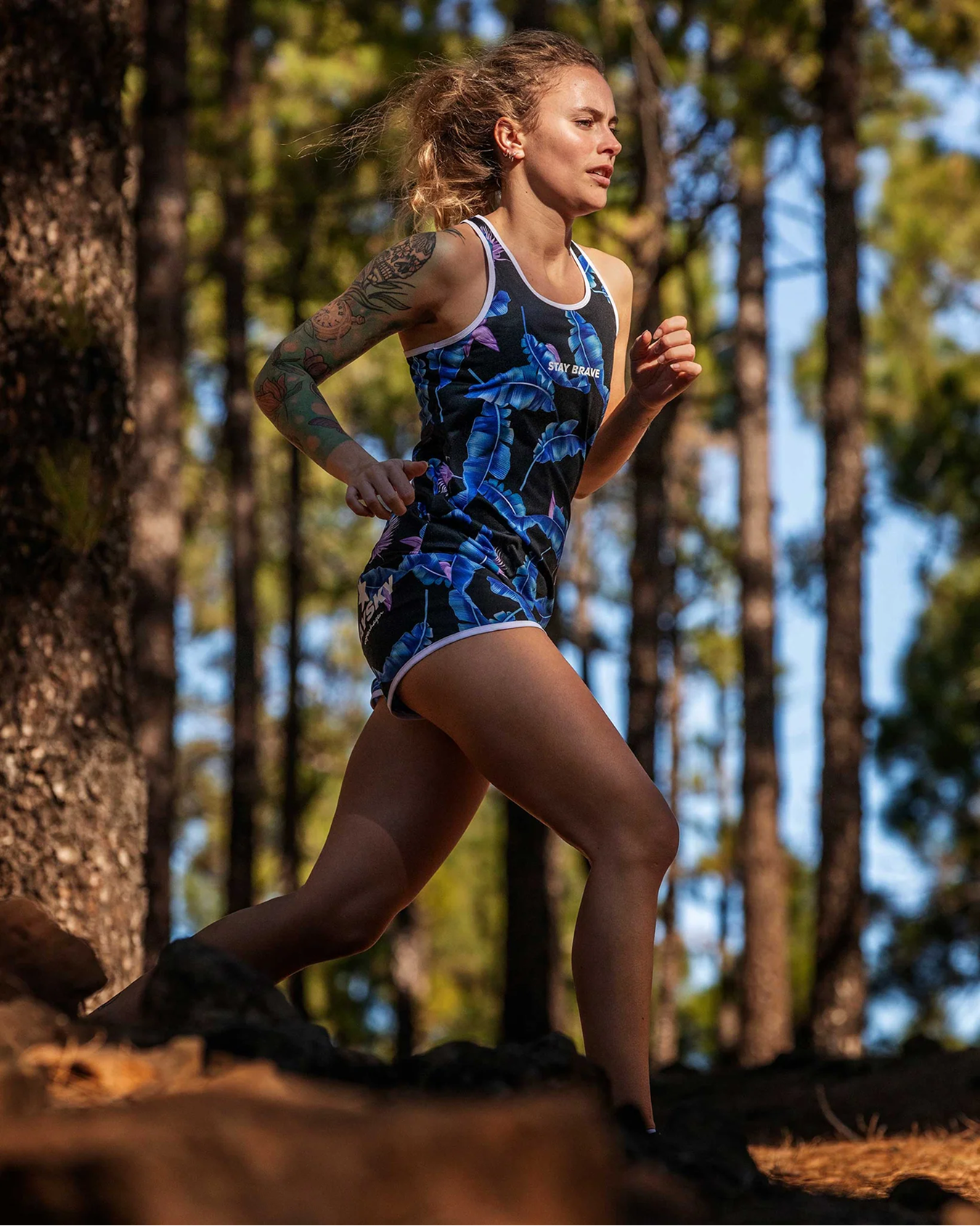
How SAYSKY increased sales conversion by 193%
SAYSKY, a high-performance apparel brand for runners, wanted a simpler, more intuitive tool that let shoppers buy with confidence right on the product page — ensuring the exact right size every time, whether they browsed from the UK, France, Denmark, or the USA.
Fit Quiz Size Recommender automatically localized the UI/UX to each shopper's language across 20 languages and adjusted the final recommendation to match regional sizing standards.
The result: a 193% lift in sales conversion, with returns down 17%.