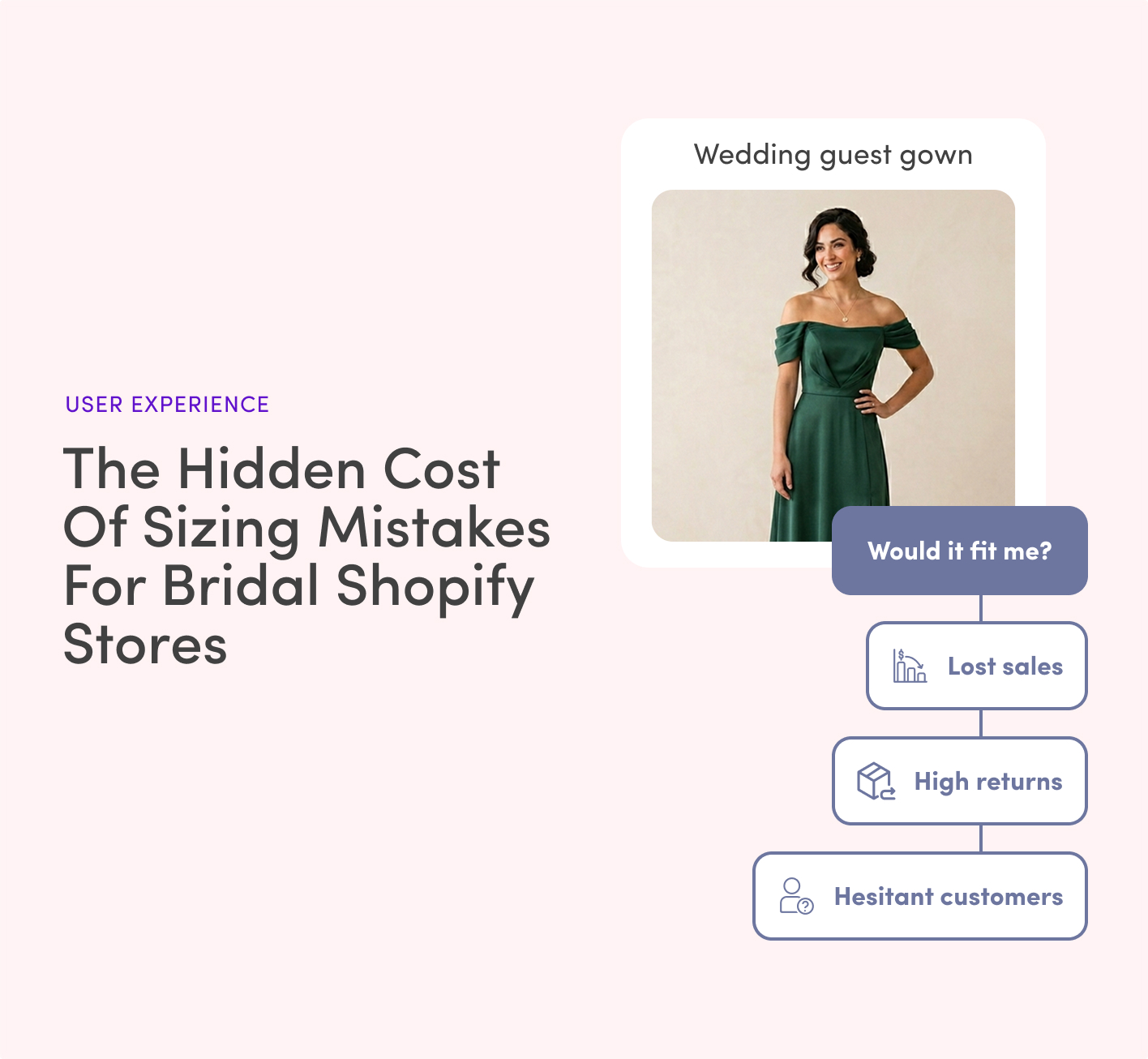
Most apparel retailers can absorb a wrong-size order without too much drama. A customer orders a medium; it arrives a little too snug. They send it back, and everyone moves on.
But bridal and luxury formalwear ecommerce doesn't work that way. Anyone running a Shopify store that sells wedding gowns, bridesmaid dresses, suits, or formal attire knows the rules are completely different.
The stakes for every single transaction are incredibly high, and there is basically zero room for error. A shopper ordering a gown or a tuxedo three months before a wedding cannot afford to get caught in a casual, weeks-long return loop. To protect margins on such expensive, high-touch garments, most online bridal brands enforce a strict final-sale or made-to-order policy. Returns usually are not even an option.
Some brands soften a strict final-sale policy by offering Store credit instead of a cash refund – it protects margins on high-cost formalwear while still giving customers a way forward if the size genuinely doesn't work.
So if the garment shows up in the wrong size, it is a massive headache. The customer is stuck dealing with huge tailoring bills, a major time crunch, or they are forced to start shopping all over again with zero budget left.
These aren't rare situations. Wedding forums and Reddit threads are absolutely packed with the fallout of final-sale sizing mistakes, and the financial frustration almost always gets directed right back at the brand.
Take a real experience shared by an online bridal shopper on Reddit who ordered a gown only to find the sizing was a total mismatch. She wrote:
I realized I couldn't get an actual refund and felt screwed out of $100... The chest on 1 side was horribly loose and sagged off my chest, while the other side fit tight. I feel so robbed.
When a customer feels "robbed" because a size chart failed them, they don't just move on. They end up taking it out on your support team.
The same thing happens when slow shipping windows crash into a strict no-refund policy. Another shopper shared her review after trying to order a formal dress for a wedding:
They sent me the wrong size. We had no resolution, so I just swore never to do business with them again after experiencing it twice. The stress is not worth it.
It is not limited to brides, either. Grooms and wedding party buyers often end up with online formalwear orders that don't fit, and because the event date is set, panic sets in immediately. One wedding planner shared the fallout of an online suit order that arrived just days before the ceremony:
The groom ordered his suit online based on his normal jacket size, but the shoulders were completely unalterable, and the pants were massive. Because it was a final-sale order, the company wouldn't exchange it in time. We had to rush to a local tailor and pay double the cost of the suit just to make it look wearable for the photos.
These quotes show the direct result of what happens when someone buys a high-ticket, high-emotion garment online tied to an immovable deadline without enough confidence to get the size right the first time. The merchant is left dealing with either an online dispute, an angry chargeback threat, or a customer who vows never to return.
Even in a physical boutique with a stylist present, bridal sizing confuses people. Wedding dress sizing developed entirely apart from modern ready-to-wear fashion. It runs notoriously small, meaning a woman who wears a standard US size 8 in everyday clothes will often need to order a size 12 or 14 bridal gown.
Traditionally, stylists order based on a bride's largest measurement. If her bust is a size 6, her waist is an 8, and her hips are a 12, the shop orders the 12 and expects a tailor to take in the rest.
That logic makes sense in person when a professional is walking you through it. Online, without that context, a static table of numbers is a recipe for a bad customer experience.
Look at an elite luxury designer like Oscar de la Renta or contemporary eveningwear powerhouse Bronx and Banco, both running custom Shopify Plus storefronts. If a shopper navigates to their bridal or high-end evening gown section, they are met with a generic, static text chart that maps inches to sizes. Expecting a customer to measure their own underbust or hips perfectly, interpret the zero-stretch reality of high-end silk or heavy crepe, and guess how their fit preference maps to a rigid chart is asking way too much. It forces a massive leap of faith at a high price point.
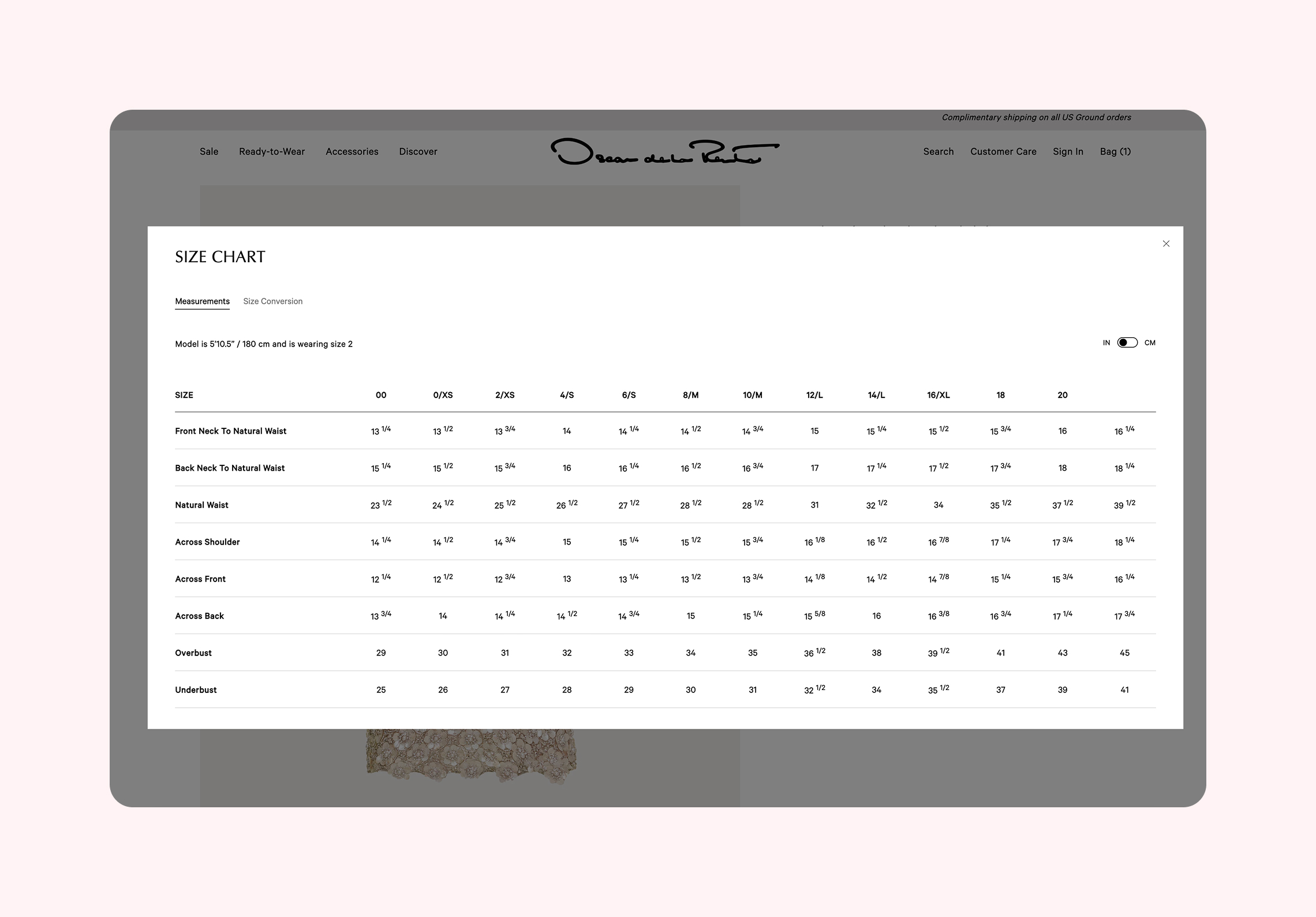
When buying bridalwear specifically, the only way a shopper can complete a purchase on these stores with any real confidence is if they already know for certain how their body maps to that specific brand’s cuts. For a first-time buyer, that is almost never the case.
Every designer uses different sizing, fabric stretch changes everything, and different cuts don't fit the body the same way. A fitted crepe gown, an A-line dress, a wide-leg bridal jumpsuit, and a tuxedo jacket all require a completely different fit. Expecting a shopper to figure that out alone on a static page is a massive gamble.
In regular retail, getting the size wrong ruins profit margins. Coresight Research estimates that the average return rate for online clothes in the U.S. is 24.4%, mostly because the item didn't fit.
For bridal brands, that loss doesn't always appear as a standard return due to final-sale policies. Instead, the costs hit your business harder. They turn into expensive credit card chargebacks, daily customer service arguments, terrible online reviews, and fights over who should pay for a local tailor to fix the mess.
And those alteration costs are no joke. Industry data from Vogue and benchmarks compiled by The Knot show that wedding dress alterations now routinely range from $700 to $1,000 and take 2 to 3 months to complete. There is a massive difference between standard tailoring and paying thousands extra because the base size was completely wrong.
Because bridal purchases are often 5 to 10 times more expensive than everyday apparel, shoppers need an incredibly high level of confidence just to hit the buy button. Research shows that nearly half of online shoppers buy multiple sizes when fit is unclear, but in bridal, that is rarely a realistic option. A bride isn't ordering 2 $1,500 gowns to see which 1 works. She's either confident enough to buy or she's closing the tab.
To protect the business from these post-purchase fires, bridal and formalwear brands have to get proactive on the product page.
Look at luxury formalwear and bridesmaid designer Ance Gria on Shopify. For a piece like their Rina Gown in Teal, they use the Fit Quiz Size Recommender to remove the guesswork at the point of purchase.

Instead of forcing a nervous customer to input sensitive details like raw weight or struggle with a tape measure, Fit Quiz analyzes how they actually like their garments to fit, the everyday retail brands they already wear, and their familiarity with formalwear silhouettes. For a bridesmaid who has never ordered a structured bodice or a high-waisted silk skirt online, that context gives them the confidence to complete the order.
Most bridal stores aren't selling just one type of clothing. You can't use the same logic for a structured bridesmaid dress as for a relaxed getting-ready robe, a silk jumpsuit, or a mini dress. Fit Quiz lets you set up completely different size rules for different items in your Shopify dashboard, so a customer isn't getting a gown recommendation based on how they want a t-shirt to fit.
It also handles details beyond just a standard size number. If a tuxedo jacket or a pantsuit needs precise length guidance, or if formal shoes need a specific width, the tool pulls that extra detail right from the answers the shopper already gave.
Good sizing guidance isn't going to completely eliminate trips to the tailor, and nobody should expect it to. Formalwear almost always needs a little tweaking to fit perfectly. But it stops the obvious, preventable mistakes where someone just reads a static text chart wrong, which keeps angry customers out of your inbox right before their wedding date.