For apparel brands, fit is one of the biggest reasons shoppers hesitate before buying, and it is also one of the biggest reasons products come back. That creates a double problem. You lose sales from people who are unsure of the size to order, and even when they do convert, you still end up dealing with returns, extra shipping costs, more support tickets, and inventory that doesn't always come back in perfect condition.
That is why a fit quiz can be more than a nice feature on a product page. For many Shopify stores, it can have a real impact on conversion rate, return rate, and overall profitability. If you are evaluating a tool like Fit Quiz by Easysize, the question is not just whether it sounds helpful. It is whether it is worth the cost and what that cost looks like relative to the problem it solves.
The good news is that you can get a pretty clear answer without making this overly complicated. Calculating the ROI of a fit quiz comes down to three things. How much money you save from fewer returns, how much revenue you gain from better conversion, and what happens to customer value over time when people get the right fit from the start.
Before you can measure what a fit quiz improves, you need to know what returns are already costing you. A lot of stores underestimate this because they only think about the refund itself, but the real cost is usually much bigger than that. Every return can include the cost of the return label, the time it takes your team to inspect and restock the item, and the loss in value when something cannot be resold at full price.
There is also a timing cost that is easy to miss. While an item is in transit and being processed, your chances of selling it again are already dropping. That matters even more for apparel brands dealing with seasonality, fast moving collections, or frequent product drops. By the time the item is back on your site and available again, shoppers may have already moved on to something newer.
A simple way to think about it is this:
Monthly return cost = number of monthly returns × return shipping cost + processing cost + inventory loss + delayed resale risk
You do not need a perfect number for this to be useful. Even a rough estimate gives you a much better baseline than guessing. If your store handles 200 returns a month and each one costs you an average of $10 between shipping, labor, lost inventory value, and the reduced chance of reselling the item quickly, returns are costing you around $2,000 a month. Once you know that number, it becomes much easier to see what reducing fit related returns could actually mean for your business.
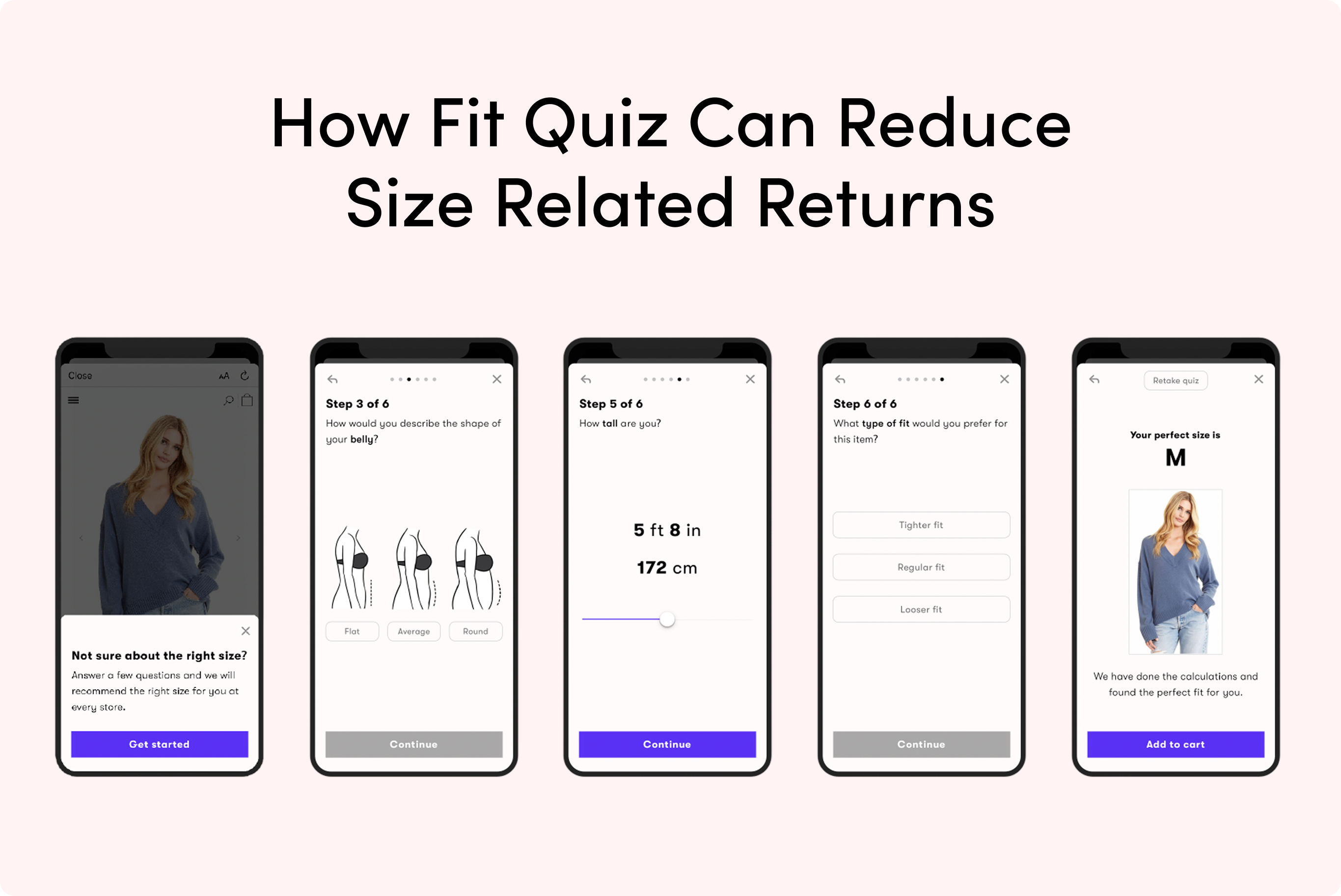
The main job of a fit quiz is to help customers choose more confidently and more accurately. When that happens, fewer people order the wrong size in the first place.
You do not need to make some giant promise here for the math to work. Even a conservative improvement can matter, especially for brands with healthy order volume. If a fit quiz reduces size related returns by 20 to 30 percent, that can create meaningful savings pretty quickly.
Using the example above, if your monthly return cost is $2,000 and a fit quiz helps reduce returns by 25 percent, that is $500 in monthly savings. That is already worth paying attention to on its own, and it is only one part of the picture.
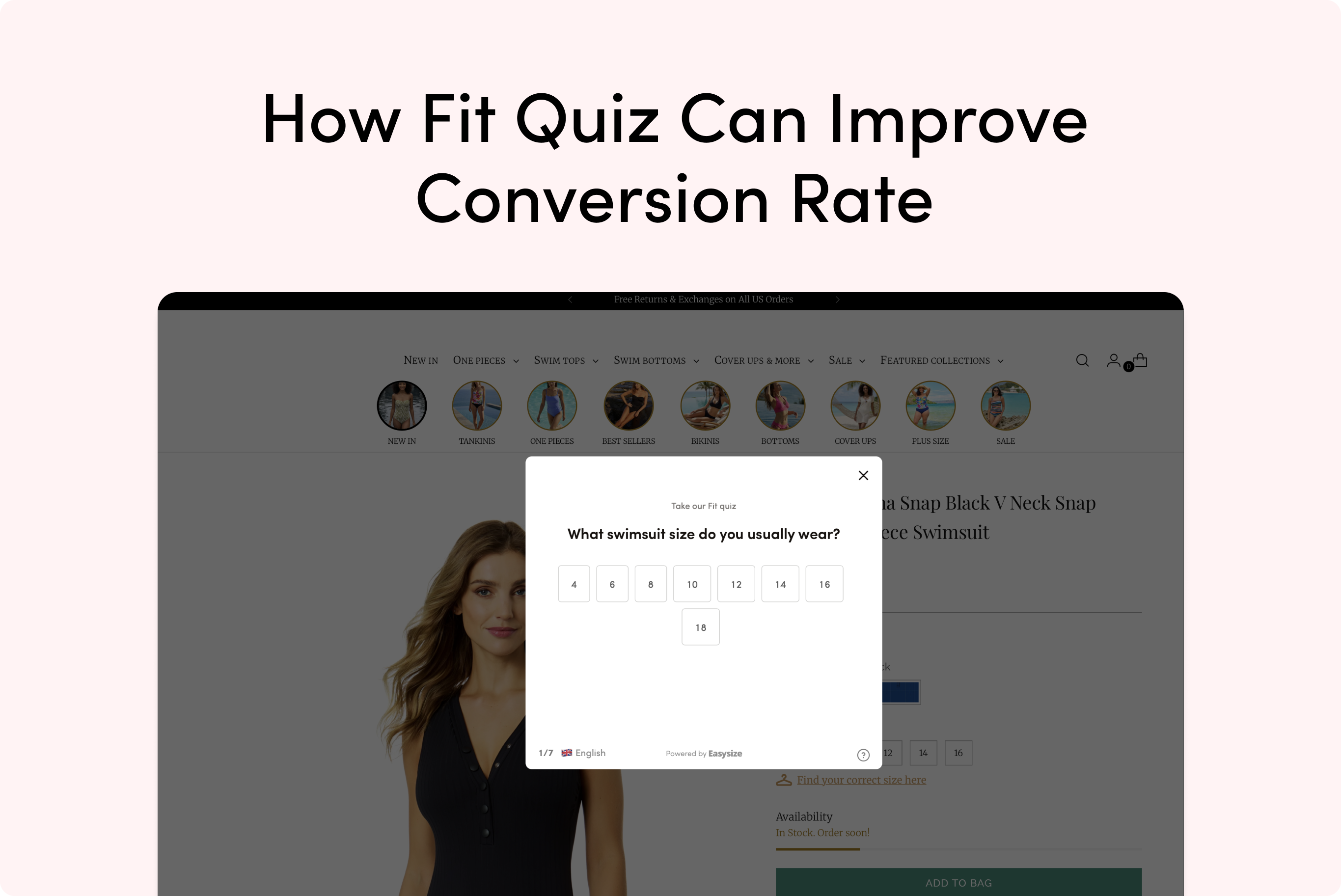
Fit uncertainty does not just create returns. It also stops people from buying in the first place. A shopper lands on a product page, likes the item, wants to order, and then gets stuck on sizing. They are between sizes, they do not trust the chart, or they had a bad experience with another brand before. Sometimes they buy anyway and hope for the best. Sometimes they leave.
That is where a fit quiz can do something genuinely useful. It reduces hesitation at the point of decision. When a shopper gets a size recommendation that feels specific to them, the purchase becomes far less risky. That can improve conversion rates, especially for first-time customers who have never bought from your brand before.
To estimate the upside, look at how many product page visitors interact with the quiz, how many complete it, and whether those shoppers convert at a higher rate than people who do not use it.
A simple way to think about the revenue lift is this:
Additional monthly revenue = site visitors × fit quiz completion rate × conversion lift × average order value
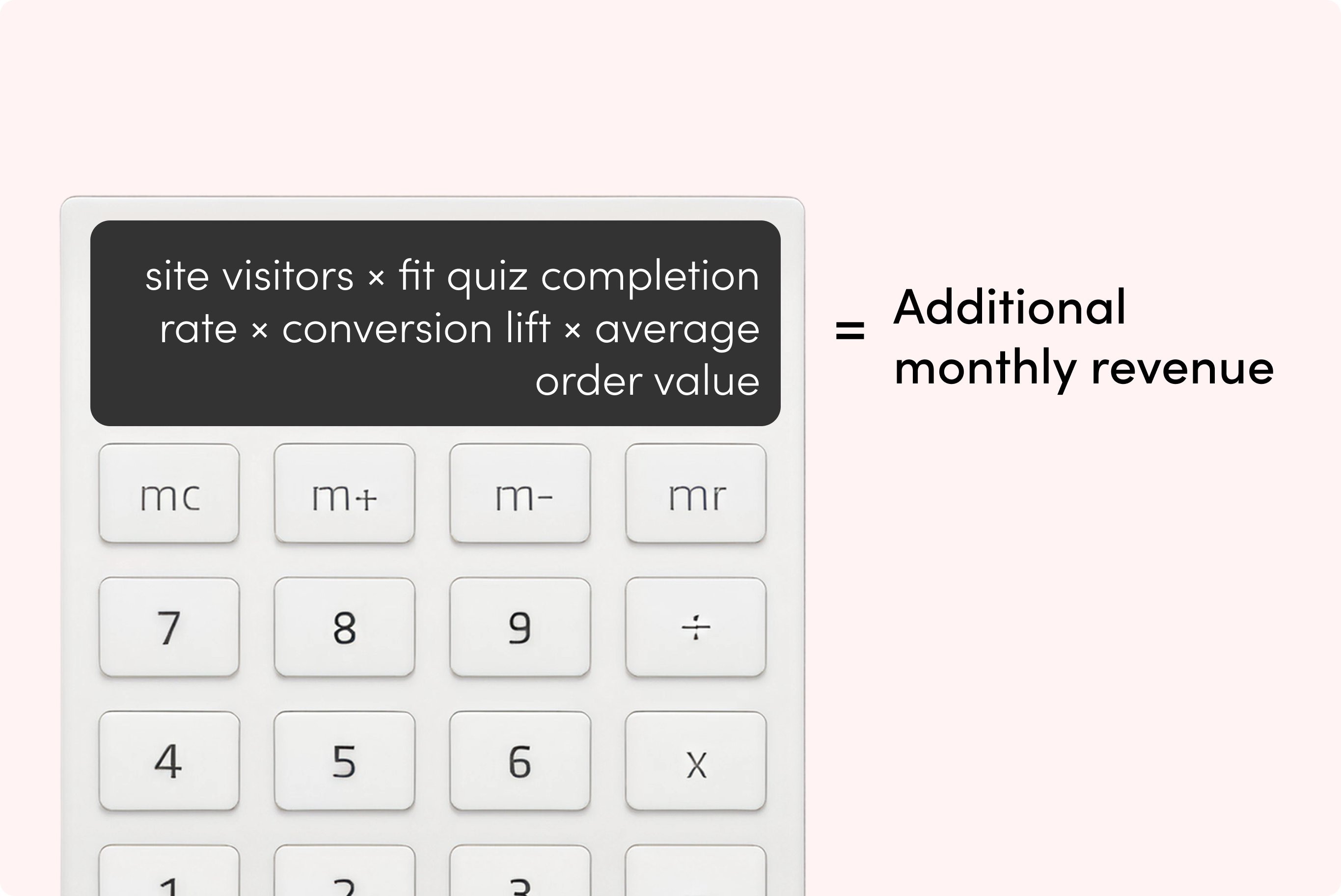
You are not trying to build a finance grade spreadsheet here. You are trying to understand whether better sizing confidence could create enough additional revenue to matter. For many apparel stores, it can.
This is the part that usually gets missed. When a customer gets the right fit on the first order, that does not just save one return. It can also increase the chances that they come back and buy again. A good first experience builds trust. A bad fit does the opposite.
That makes customer lifetime value part of the ROI conversation too. If your fit quiz helps first time buyers feel more confident and reduces the friction around sizing, it can improve retention over time. That is harder to measure immediately than returns or conversion, but it still matters. A shopper who trusts your sizing is a lot more valuable than one who feels like ordering from your store is a gamble every time.
Even if you do not plug LTV into a strict formula, it still belongs in the bigger picture. Some gains show up right away in reduced return costs. Others show up more gradually in repeat purchase behavior and lower customer churn.
Once you have estimated your monthly savings from fewer returns and your monthly revenue lift from better conversion, you can compare that total gain against the monthly cost of the app.
A simple formula looks like this:
ROI = (monthly savings + monthly revenue gain − monthly app cost) ÷ monthly app cost
Let’s use a basic example. Say your current return costs are about $2,000 a month. If a fit quiz reduces those costs by 30 percent, that gives you $600 in savings. Let’s also say better sizing confidence helps generate $1,500 in additional monthly revenue through improved conversion rates. That brings your total monthly gain to $2,100.
If the app costs $49 a month, the math becomes pretty straightforward. The cost of the tool is small compared to the potential upside. That does not mean every store will see that exact result, and it is better not to overhype it. It does show, though, why fit tools can pay for themselves quickly when sizing is a major source of friction.
One thing this kind of calculation makes clear is that the value of a fit quiz does not come from a single source. Yes, it can reduce returns, and that is the obvious part. But it can also help more shoppers convert, reduce the volume of sizing questions your support team has to answer, and give customers a better first experience with your brand. Over time, that can influence retention and repeat purchase behavior, too.
It can also give merchants better information. If you start seeing patterns in the sizing data, that can help with merchandising, product development, and even future buying decisions. Maybe a certain cut runs small more often than expected, or maybe one category creates more uncertainty than another. That kind of insight is useful far beyond the quiz itself.
For Shopify apparel and footwear stores, sizing issues touch almost every part of the business. They affect conversion, returns, support, and customer trust all at once. That is why a fit quiz is not just a product page add on. It can be part of a much bigger profitability strategy.
If your store is dealing with frequent fit related returns, high hesitation around sizing, or uncertainty around fit from first time shoppers, the cost of doing nothing may already be higher than the cost of the app. That is really the comparison worth making. Not just what the tool costs, but what poor fit confidence is already costing the business every month.
Once you look at it that way, the ROI conversation becomes a lot easier to understand.
The real question is not whether a fit quiz has a monthly fee. The better question is whether your current sizing experience is costing you money through lost conversions, preventable returns, and customers who never come back after a bad first fit.
That is really what this comes down to. If your current sizing experience is leading to lost sales and avoidable returns, it makes sense to give customers a better way to choose the right fit. When people feel more confident in what they are buying, you create a better customer experience while reducing unnecessary business costs.