The size chart alone has been failing brand new shoppers on your Shopify store for years.
A chart gives shoppers measurements, but it does not always help them understand how something will fit on their own body. So they guess, order more than one size, return what does not work, and everyone ends up paying for a problem that could have been handled earlier.
We scoped out a few e-commerce brands, including some on Shopify, to see who is taking sizing seriously.
Some use full size recommendation tools. Some keep it simpler with better product page guidance, fit notes, model information, or review data that actually helps shoppers make a decision. They are not all solving the sizing problem the same way, which is why they are useful to look at together.
Strong sizing experiences are usually easy to find, easy to understand, and built into the product page. The best ones do not make shoppers dig through tabs, study a chart, or figure it all out on their own. They give shoppers more useful information before they buy.
The best sizing experiences live on the product page, give shoppers a clearer answer, and make the decision easier.
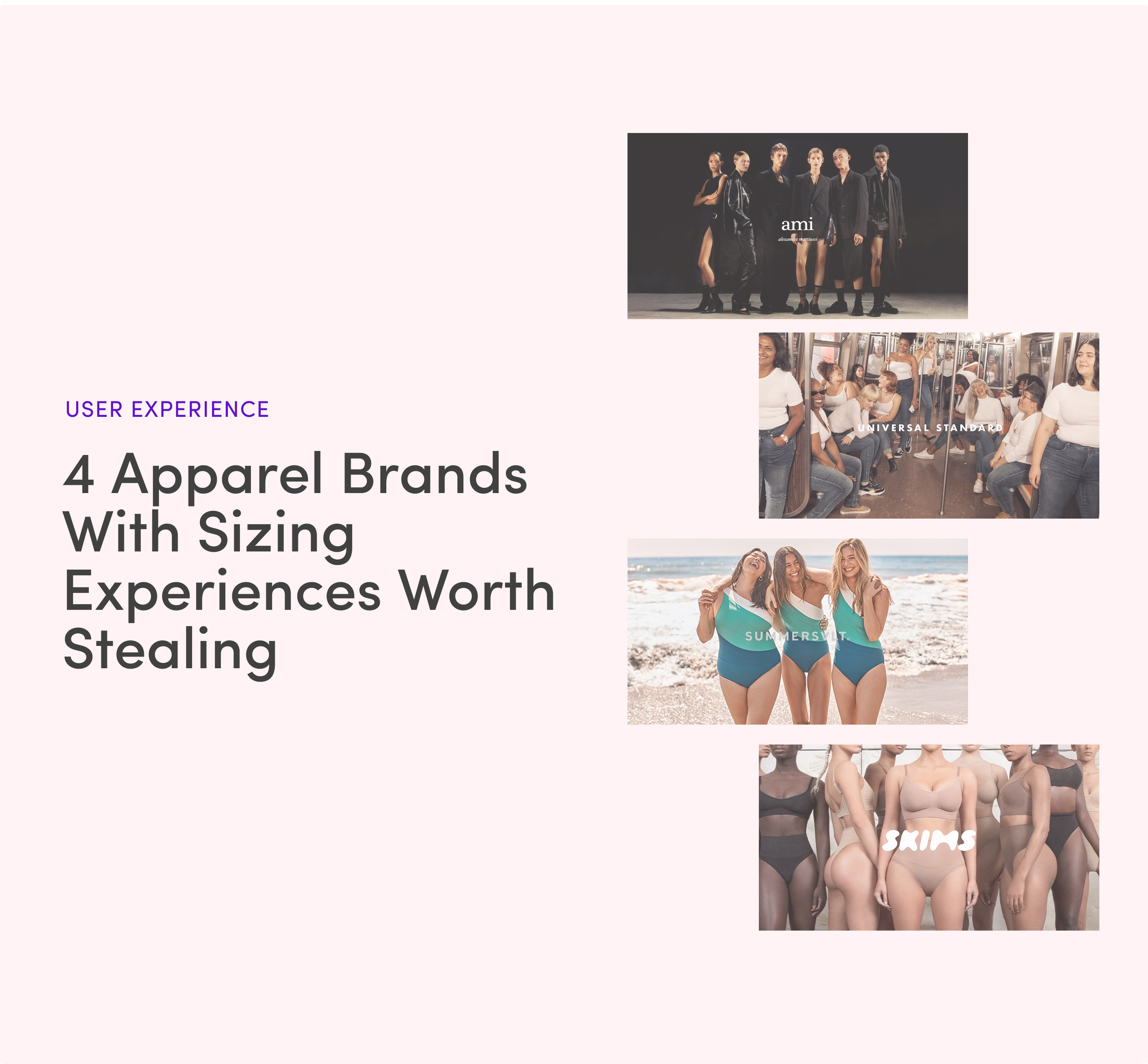
Skims and Neiwai use real shopper reviews to show how products fit across different body types. Universal Standard puts models of different sizes front and center so shoppers can see a product on someone closer to their own size. Summersalt builds fit choices directly into the product itself. Ami Paris shows how a size recommender can work on a real Shopify store.
Each brand takes a different approach, but the goal is similar. Give the shopper enough information to make a better size decision before they add the product to their cart, and risk a bad experience or a return costing both time and money.
Most review sections do not help much with sizing. A shopper can read five reviews that say “love this dress” and still have no idea if they should order a small or a medium.
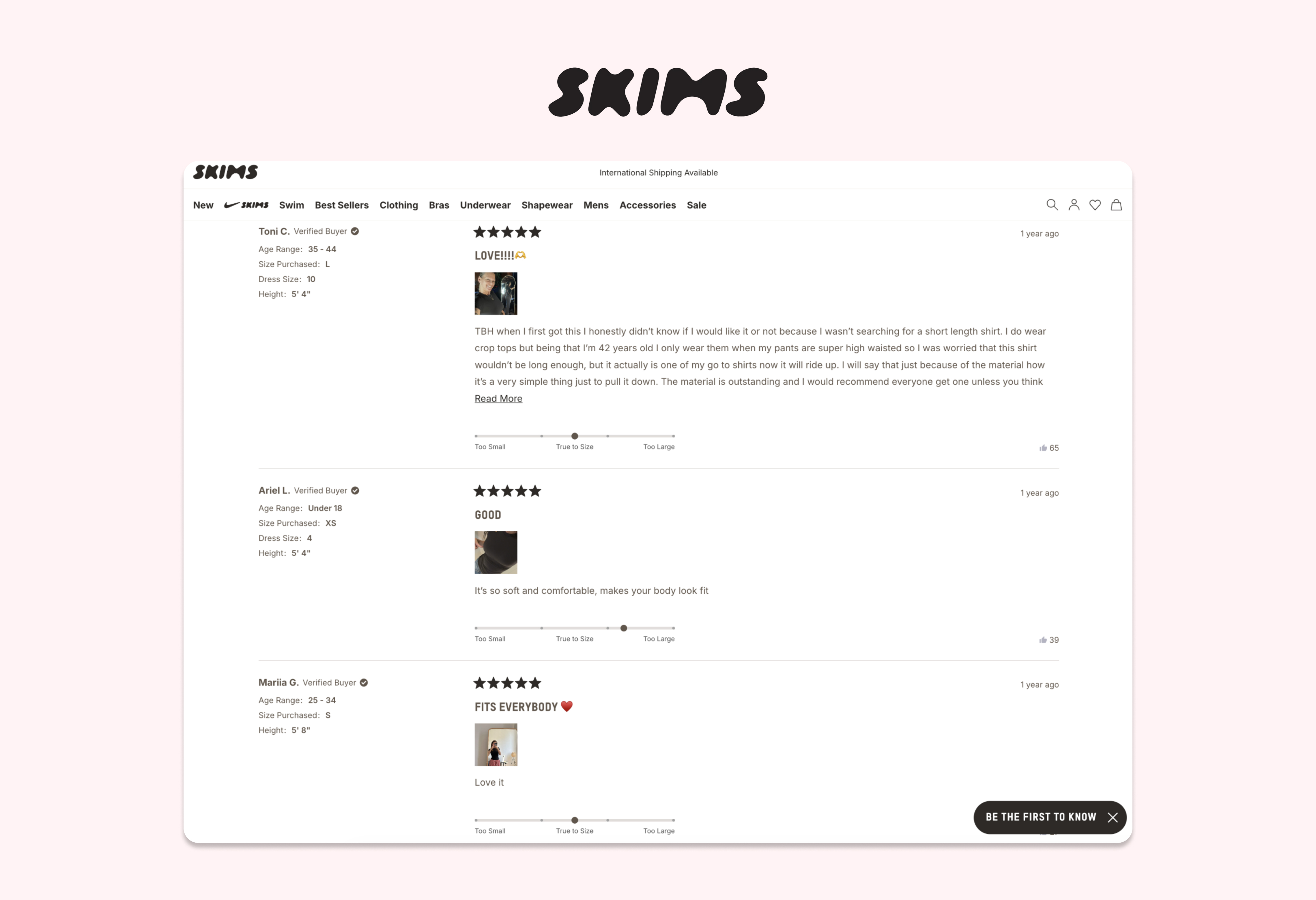
Skims uses reviews in a more practical way. On their product pages, reviews are displayed through Okendo and include the reviewer’s height, weight, and the size they purchased alongside the written review. A new shopper can scroll through, find someone close to their own measurements, see what size they bought, and read how it fits. That is much more useful than a generic review that only says the product is cute or comfortable.
Neiwai takes a similar idea and makes it more visual. Instead of relying only on individual reviews, they show an illustrated summary of fit feedback from real customers. Shoppers can get a quick read on how the product fits across different body types and sizes without digging through every review one by one.
Both approaches use information the brand already has and make it useful for the next shopper. Someone trying to choose a size does not need a perfect answer from every review. They need a few useful reference points from people who sound close enough to them.
If your store already collects reviews, those reviews can do more than tell shoppers whether people liked the product. By asking for details like height, weight, and purchased size, you can turn reviews into a sizing reference shoppers use before they buy.
Apps like Okendo make this easy to set up on Shopify. The reviews are already there. Adding a few structured fields to the review form gives first time shoppers more to work with when they are trying to figure out if a product will fit.
Fit Quiz Size Recommender works alongside reviews, not instead of them. Both share the similar logic. Reviews let you filter feedback from shoppers with your body type, while Fit Quiz uses data from shoppers like you to find the right size.
A lot of brands show one model in one size and leave shoppers to imagine the rest. Universal Standard takes a more direct approach. Above their product images, they show the same item on models with different sizes and body shapes. The sizing is labeled clearly, so shoppers can see how the product looks on someone closer to their own body. Those images are at the top of the page, not hidden in a tab or buried in a size guide.
For a brand built around inclusive sizing, this makes sense. But the idea is useful for any apparel brand. Shoppers are trying to picture how something will look on them. Showing more than one version of the product gives them a better chance of making the right call.
You do not need to photograph every product on ten different models to use this idea. Even two or three models in different sizes, with their sizes clearly labeled, gives shoppers more to go on than one product image.
For brands selling across a wider size range, this kind of visual reference can make the product page more useful right away. Fit Quiz Size Recommender gives shoppers a size recommendation based on their fit preference and body shape. Body shape images make it easier for shoppers to choose the option that looks most like them, so the recommendation feels more personal and accurate.

Most brands deal with sizing after the product is already designed. Summersalt builds more of that thinking into the product. On their product pages, shoppers can choose between standard and long torso options before selecting a size. Summersalt also shows details like butt and boob coverage directly on the PDP, so shoppers know more about the suit before they buy. Their fit is based on over 1.5 million measurements from 10,000 real women, and they make that part of the product story.
Summersalt designs swimsuits for different body types and makes those choices clear on the product page. Shoppers can choose details like long or short torso and see more information about coverage before they buy. The sizing information is built into the shopping experience instead of being treated like a separate size chart.
Not every brand can offer torso specific sizing, but most apparel brands have fit details they could explain better. If a fabric has a lot of stretch, say that. If a silhouette works better for certain fit preferences, say that. If your design team has a useful fit note, put it on the product page where shoppers are making the decision.
The more specific you are about how something fits, the less guessing the shopper has to do. Fit Quiz Size Recommender helps with the size decision by recommending additional fit attributes alongside the size recommendation. These include attributes like slim, regular, and loose fit), width (regular or wide), torso (regular or long). Clear product page information helps answer the rest of the questions shoppers usually have before they buy.

Ami Paris is a contemporary ready-to-wear brand with a strong sizing setup for its unisex products. On their product pages, they show both male and female models wearing the same item. The page includes each model’s size and their Fit Quiz size recommendation, so shoppers can compare the model, the size shown, and the recommendation in one place.
Ami Paris uses Fit Quiz Size Recommender to offer sizing guidance to their customers based on a shopper’s gender so unisex items take that into account. The recommendation on the page comes directly from the app, which gives shoppers more context before they choose a size.
Unisex products can be harder to buy online because fit depends so much on how the shopper wants to wear the item. Someone buying a t-shirt oversized needs different guidance than someone buying the same shirt as a true to size basic. Ami Paris handles that by giving shoppers more product and sizing context on the page.
If your store carries unisex products, oversized styles, fitted styles, or anything where the fit changes based on how the shopper wants to wear it, give them a better reference point.
Showing a model with their size and recommended size helps the shopper understand what they are looking at. Fit Quiz makes this easier to add on Shopify because the size recommendation appears on the product page and works alongside the product imagery already there.

A lot of apparel returns start on the product page. The shopper was unsure. The fit information was too vague. The size chart did not answer their question. The model looked nothing like them. The reviews did not say enough. So they guessed.
Better sizing experiences reduce that guesswork before the order happens. The brands above are not all using the same tools, but they are doing the same kind of work. They are giving shoppers more useful information at the moment they need it. For Shopify apparel brands, that is the part worth borrowing.
Fit Quiz Size Recommender helps Shopify apparel and footwear brands give shoppers a more confident size recommendation directly on the product page. It works alongside your size charts, reviews, model images, and product details so customers have a clearer path to choosing the right size before they buy.