

You can find the phrase “sustainable apparel brands” stamped on millions of clothing hang tags every year, with little operational substance behind it. A company can easily source certified organic cotton but still end up shipping half its inventory back and forth across the country because customers are forced to guess their size during checkout. A British Fashion Council report found that 93% of surveyed shoppers who had returned an online fashion purchase cited incorrect sizing or fit as a reason. Ecommerce returns in the US generate an estimated 24 million metric tons of carbon emissions annually, and returning an order may add around 30% to the emissions created by its initial delivery.
Overproduction creates a similar environmental burden from the manufacturing side. When an apparel brand manufactures inventory based on a traditional seasonal forecast rather than actual customer orders, it commits to raw fabric, factory labor, and ocean freight before a single buyer visits the Shopify store. If the forecast is wrong, that excess inventory eventually gets marked down at a loss or sent straight to a landfill.
The scale of the problem is significant, but brands selling online have many opportunities to improve. Some changes require a major rethink of how products are manufactured, while others come from improving one part of the shopping experience, changing the materials used, expanding the size range, or reducing the number of products returned because of poor fit. There is no single operating model every sustainable apparel brand has to follow.
In this article, we’re going to explore how three apparel brands on Shopify approach sustainability in very different ways. Intention makes each piece of apparel after the order is placed on their store, which makes accurate sizing a much bigger part of the model. Tentree puts more emphasis on sustainable materials and backing up its environmental claims, while Girlfriend Collective brings recycled fabrics, inclusive sizing, and resale into the same conversation. The common thread is that sustainability shows up in how each business operates, not just in the language it uses to market itself.
Intention offers made-to-order clothing that is curated after a customer places an order rather than keeping pre-made inventory on warehouse shelves. Its apparel and photo art are produced locally in more than 130 countries, allowing orders to be fulfilled closer to the customer. Founders ClaraXenia and Nils built the brand around pairing original photo art with organic and recycled apparel, but because every piece is produced for the individual purchase, they enforce a strict no-return policy for sizing mistakes or a change of mind.
This model requires a different financial calculation than traditional retail. A made-to-order brand cannot easily absorb a high number of returns because purchased items have been produced for a specific order. When the size is wrong, the item cannot always be put back on a warehouse shelf and sold to the next buyer. The brand may have to remake it or write off the original piece entirely.
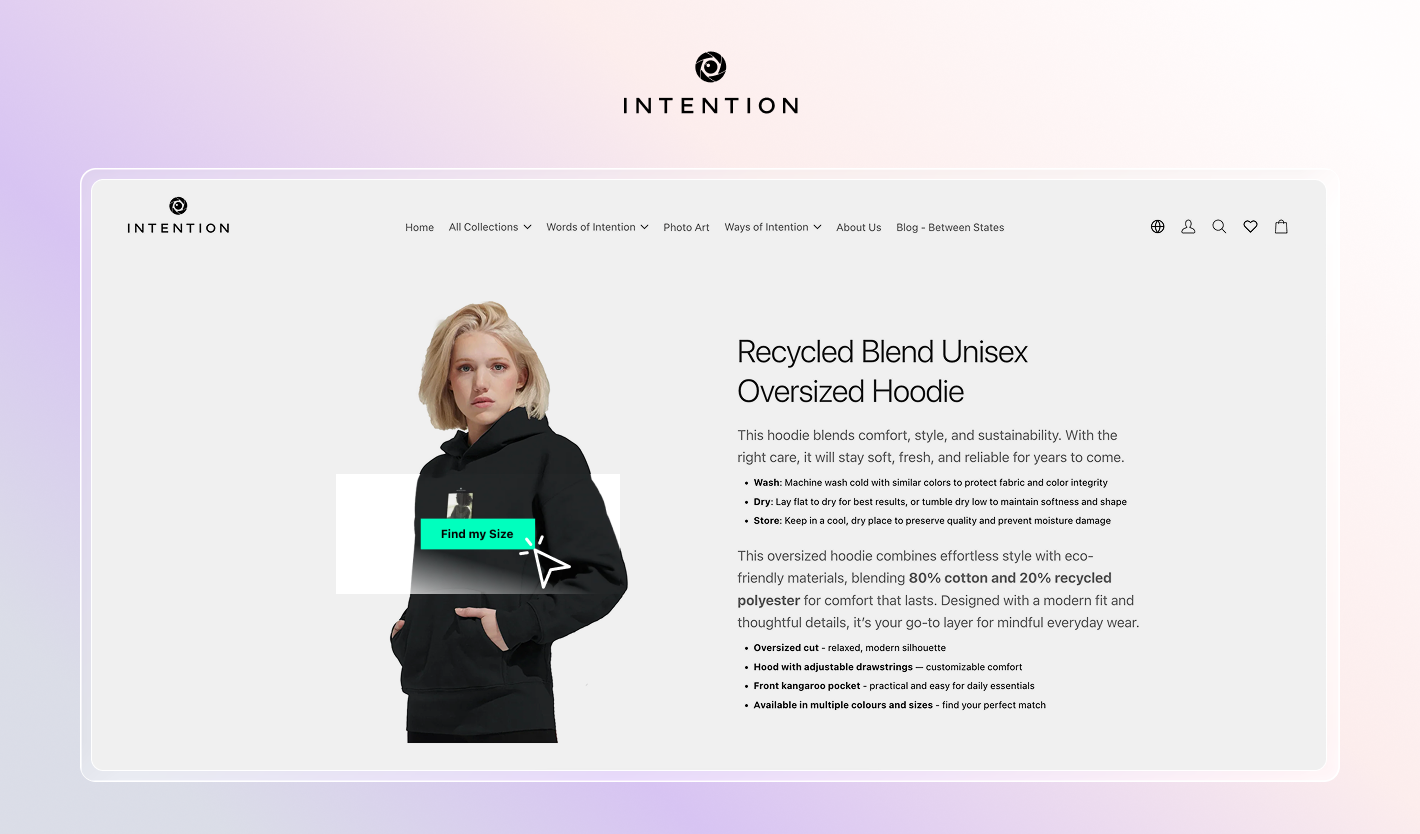
To avoid errors and cut down on waste, Intention placed the Fit Quiz Size Recommender Shopify app directly on its product pages rather than relying on a generic, static size chart. The quiz appears in a module labeled “Find Your Best Fit For This Style,” with “No Measuring!” called out directly so shoppers know they do not need to use a physical tape measure to complete it. Intention also placed the quiz on its main size guide page, reaching buyers who look for sizing help before they open a specific product.
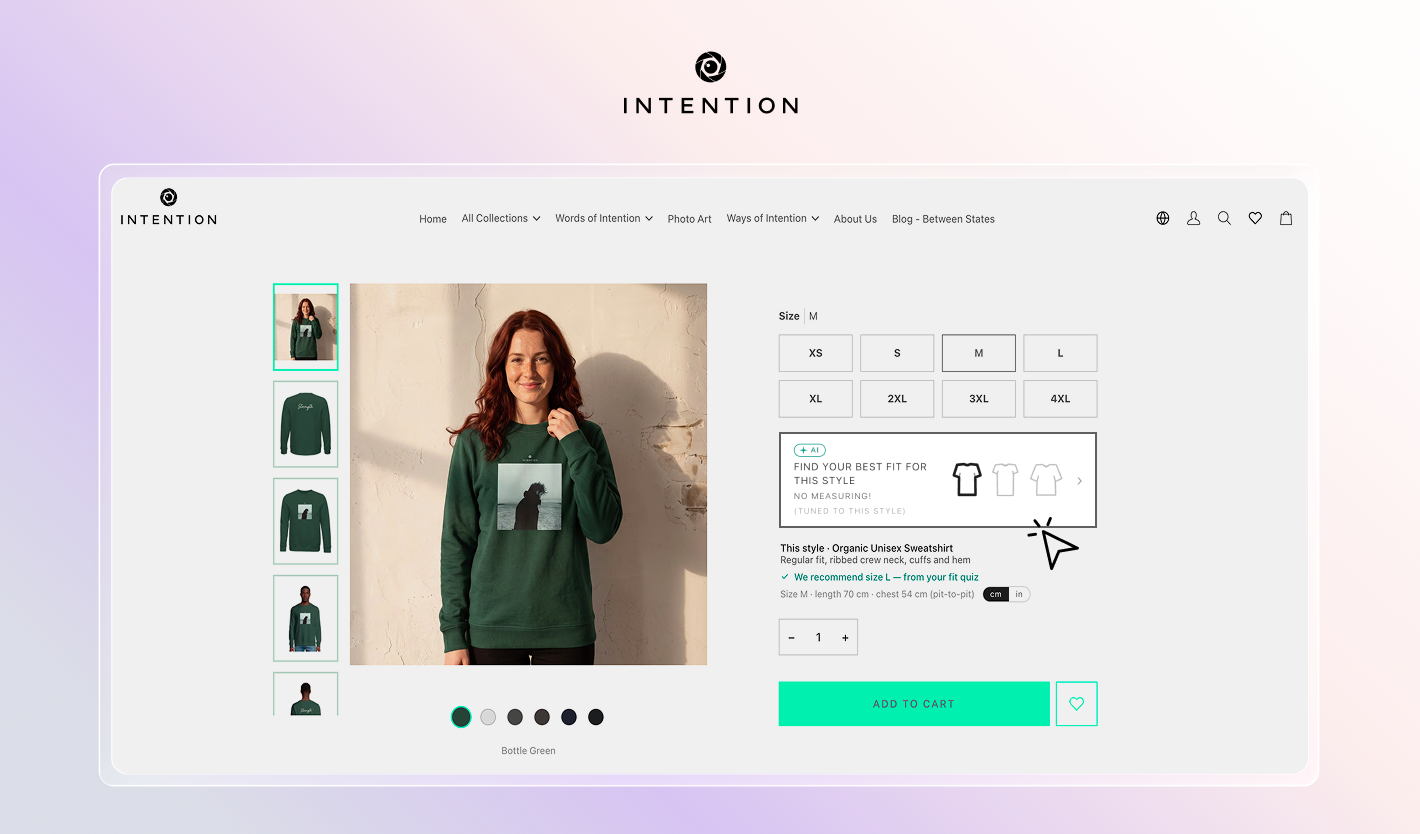
Once a shopper finishes the quiz, the recommended size appears directly next to the store’s regular size selector, along with the corresponding length and chest measurements in centimeters or inches. Instead of receiving only a generic size letter, the shopper gets actual numbers that can be compared with clothing already hanging in their closet.
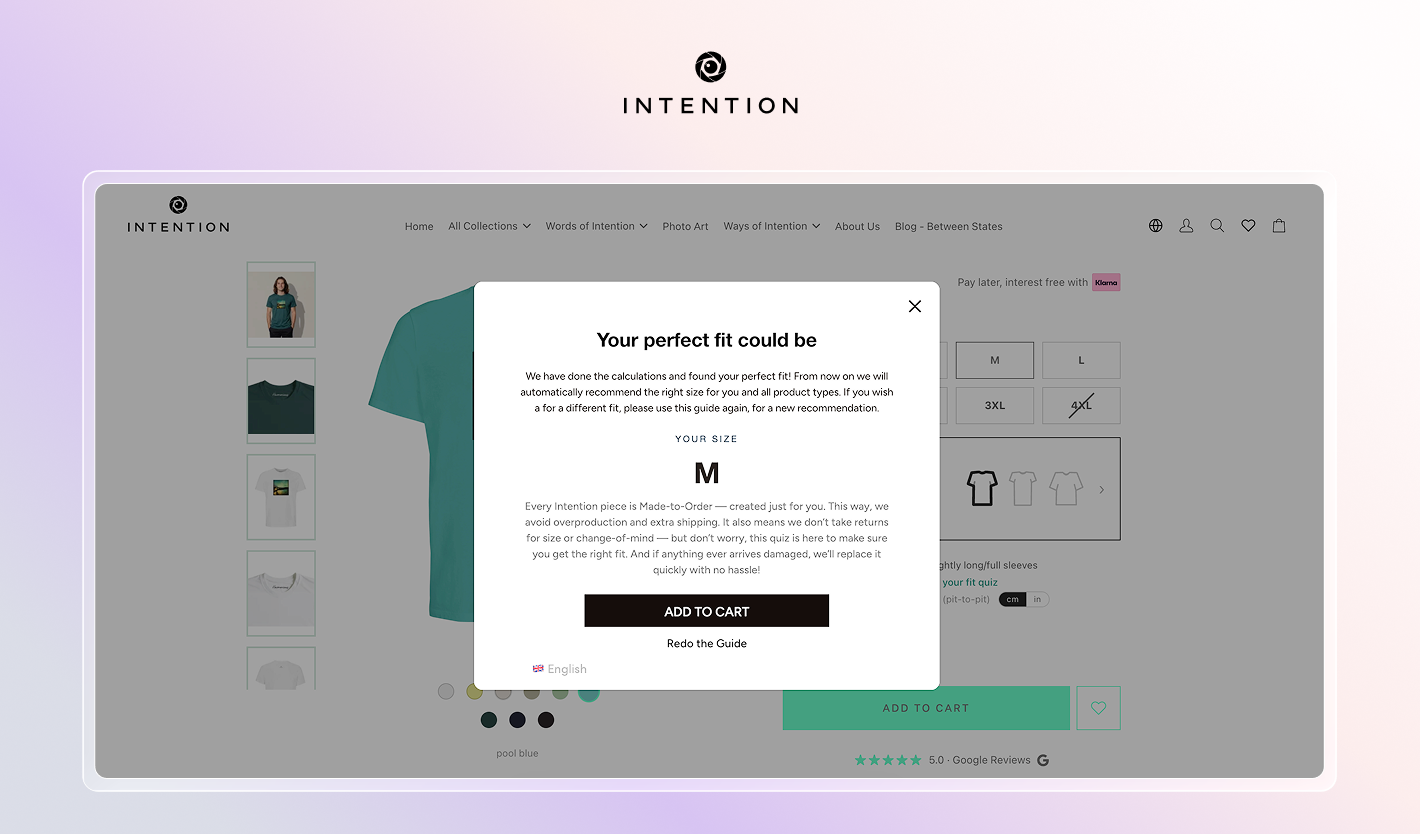
The same issue comes up for any made-to-order apparel brand. Producing clothing only after someone buys it helps avoid deadstock, but the model still creates waste when the customer chooses the wrong size. A custom piece usually cannot go back on the shelf for someone else, so the brand may have to remake it or write it off entirely. That can erase much of the benefit of avoiding overproduction in the first place. It also gets expensive, with returns costing an average of $21 to $46 per order once return shipping and warehouse processing are included.
Even when a brand is not using a made-to-order model, it still has to answer questions about what its clothing is made from and where those materials come from. Tentree handles this by giving shoppers more information about its supply chain, moving beyond the tree counter on its homepage where it tracks the more than 120 million trees it has planted.
Tentree gives shoppers more than a general promise that its clothing is better for the environment. Its product pages break down the materials used in each item, including organic cotton, hemp, recycled polyester, and Tencel. The company also shares information from its factory audits and holds B Corp certification, so customers are not being asked to take every claim at face value.
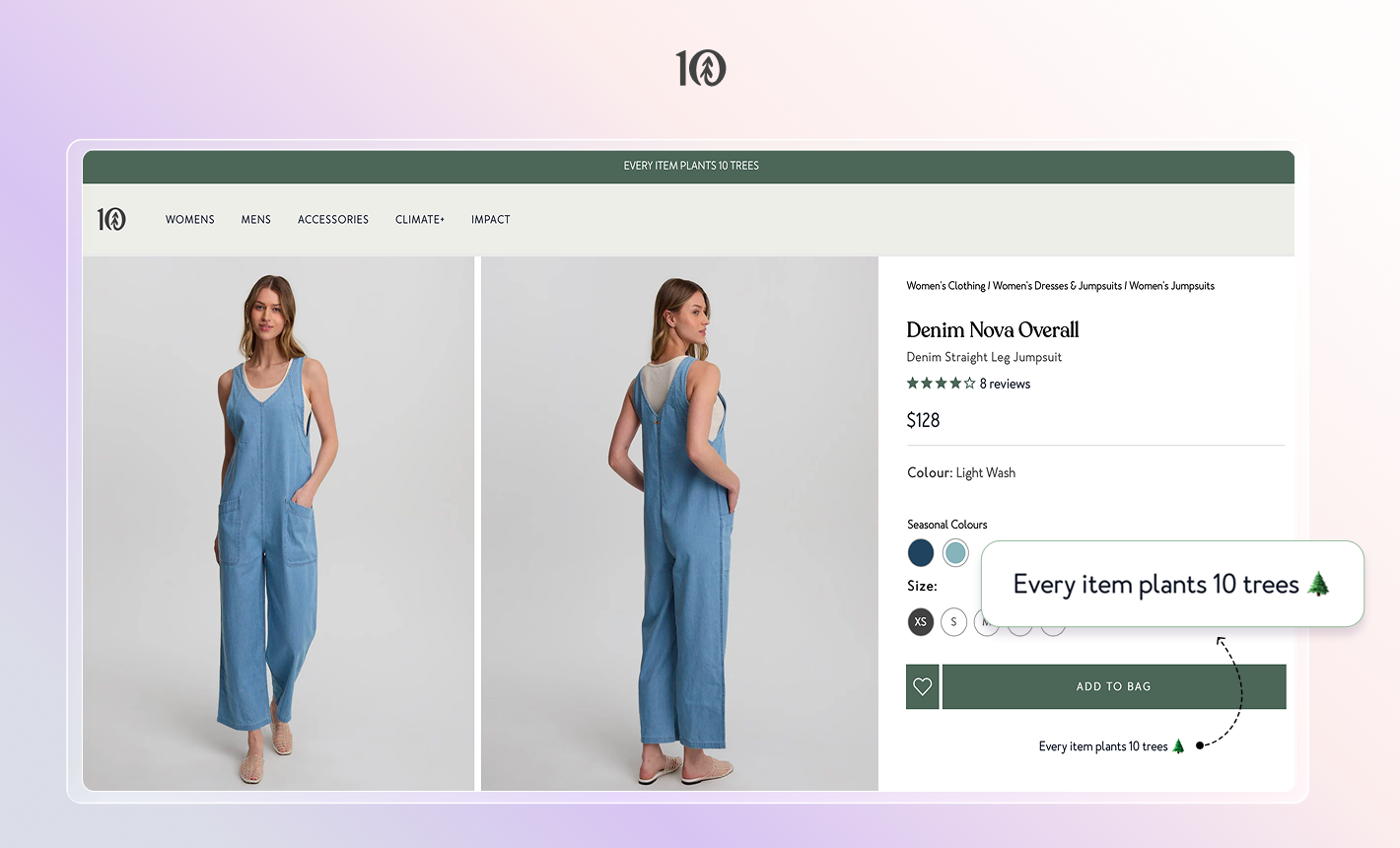
Smaller apparel brands do not need a tree-planting program to follow the same idea. They can start by being more specific about what their products are made of, where those materials come from, and which external standards or certifications support their claims. Words like eco-friendly have been used so often that they do very little on their own. A named supplier, an exact material breakdown, or a recognized certification gives shoppers something more verifiable and concrete to back up their claims.
The next question is who actually gets to wear those materials and what happens to the clothing after it has been used. Girlfriend Collective produces activewear using fabrics made from post-consumer plastic bottles and salvaged fishing nets, and it displays information about the recycled materials used in each piece directly on the product page.
The company offers many of its products in sizes ranging from XXS through 6XL, making extended sizing part of the regular product line rather than a separate collection. Customers who struggle to find their size at traditional retailers are not forced to choose between finding clothing that fits and buying from a company using recycled materials. Girlfriend Collective also operates a program for used items, helping keep its clothing in circulation after the original owner is finished with it.
Girlfriend Collective gives shoppers a better idea of how each item should fit before they order. On products made with compressive fabric, the brand explains that the garment may feel especially snug at first and loosen slightly after a few wears. That kind of detail can keep someone from immediately deciding they ordered the wrong size and sending it back.
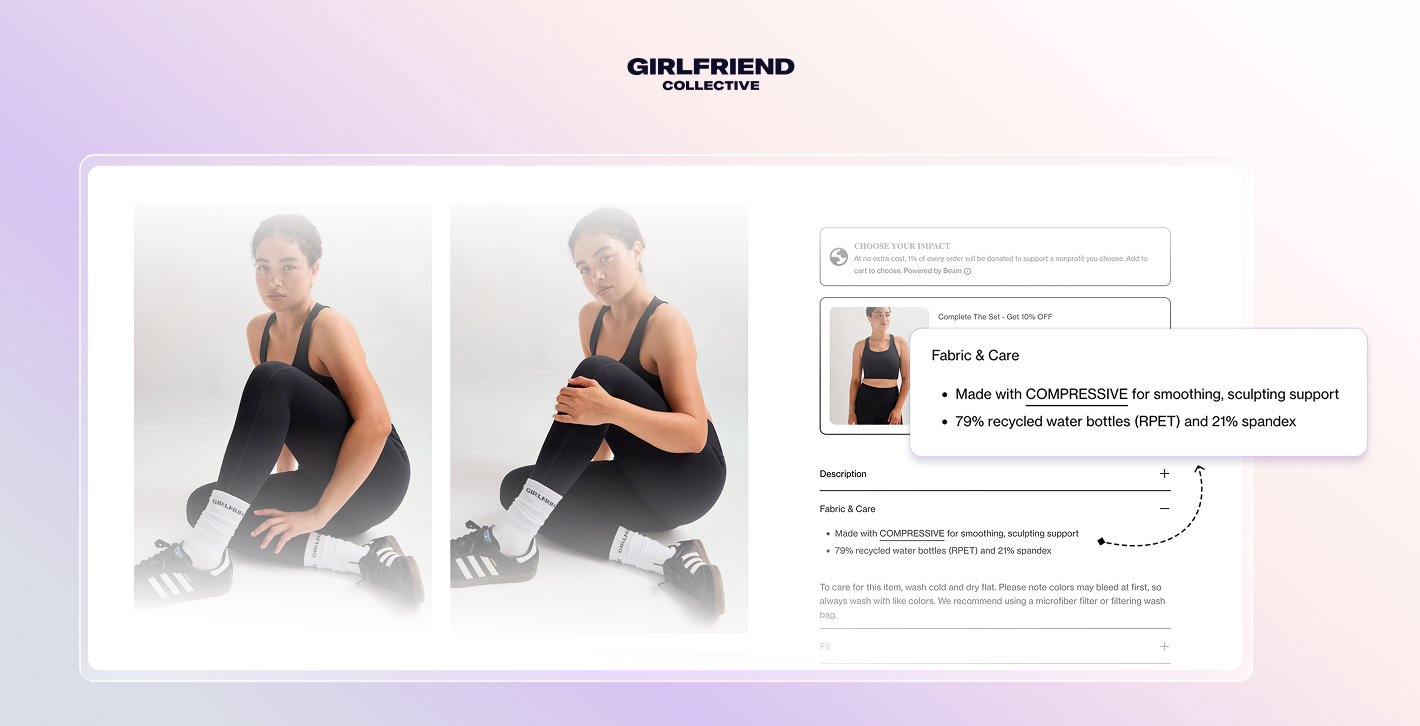
Looking at materials, sizing, and what happens after the first purchase covers more of the garment’s lifespan than any one initiative could on its own. Recycled fabric is only part of the equation if an item is returned immediately, rarely worn, or discarded because the customer was not given enough information about the fit.
Sizing is not the main message any of these brands leads with, but it still affects how well each model works. For Intention, the wrong size can mean remaking a piece that was only produced after the order came in. Girlfriend Collective has a much broader size range, so clear fit information helps shoppers know what to expect before they buy.
Tentree talks more about materials and sourcing, but sizing still affects what happens after the order ships. When an item comes back because it does not fit, the brand has to process it again and hope it can still be sold. Better sizing does not replace responsible materials or factory standards, but it can prevent avoidable returns that would add more waste to the process.
Returns are often left out of the sustainability conversation even though they create another round of shipping, handling, and packaging. If the replacement does not fit either, the same order can lead to a third trip. The item may also come back in a condition that makes it harder to resell. A brand can make strong choices around fabric and production and still create unnecessary emissions if shoppers do not have enough help choosing the right size.
Today, 47.4% of retail merchants have used AI to improve the sizing information available to shoppers, and brands using dedicated fit tools have reported a 10% to 30% drop in size-related returns. Improving fit will not solve every sustainability problem in apparel, but it can reduce one of the most avoidable sources of waste. When shoppers choose the right size the first time, brands reduce the need for return shipping, extra packaging, and warehouse processing, while lowering the number of products that may never be sold again.
Fit Quiz Size Recommender gives shoppers a size recommendation directly on the product page by asking a few simple questions about what they usually wear and how they like their clothes to fit. The recommendation can adjust by product and style, giving customers more useful guidance than a standard size chart and helping brands reduce sizing mistakes before they turn into another return.




.jpg)