

Size-related returns are a common problem for Shopify apparel and footwear stores. A customer orders their usual size, then finds that the jeans run big or the shoes fit differently.
The product page can prevent some of these returns. A short note to size down or clear information about returns and exchanges both help.
A size chart shows measurements, but it does not always tell shoppers which size to buy, how much the fabric stretches, or what a return will cost.
We looked at 5 Shopify stores that explain sizing and returns well before checkout. Each one takes a different approach, with ideas you can use on your own product pages.
Shoppers who are unsure about size may order two sizes, contact support, or leave without buying. A clear return policy reassures them, but it does not answer the sizing question.
Shoppers also accept return rules when they know them up front. In a survey of more than 1,000 consumers, Returnista found that 70% of shoppers were willing to pay a return fee, and only 18% said stores should always cover return costs.
Explain any fees or limits before the customer places an order. Shoppers should be able to pick a size and understand the return rules without opening several pages.
Shoe sizing varies by style, even within one brand. A size 8 in sneakers may not be a size 8 in loafers.
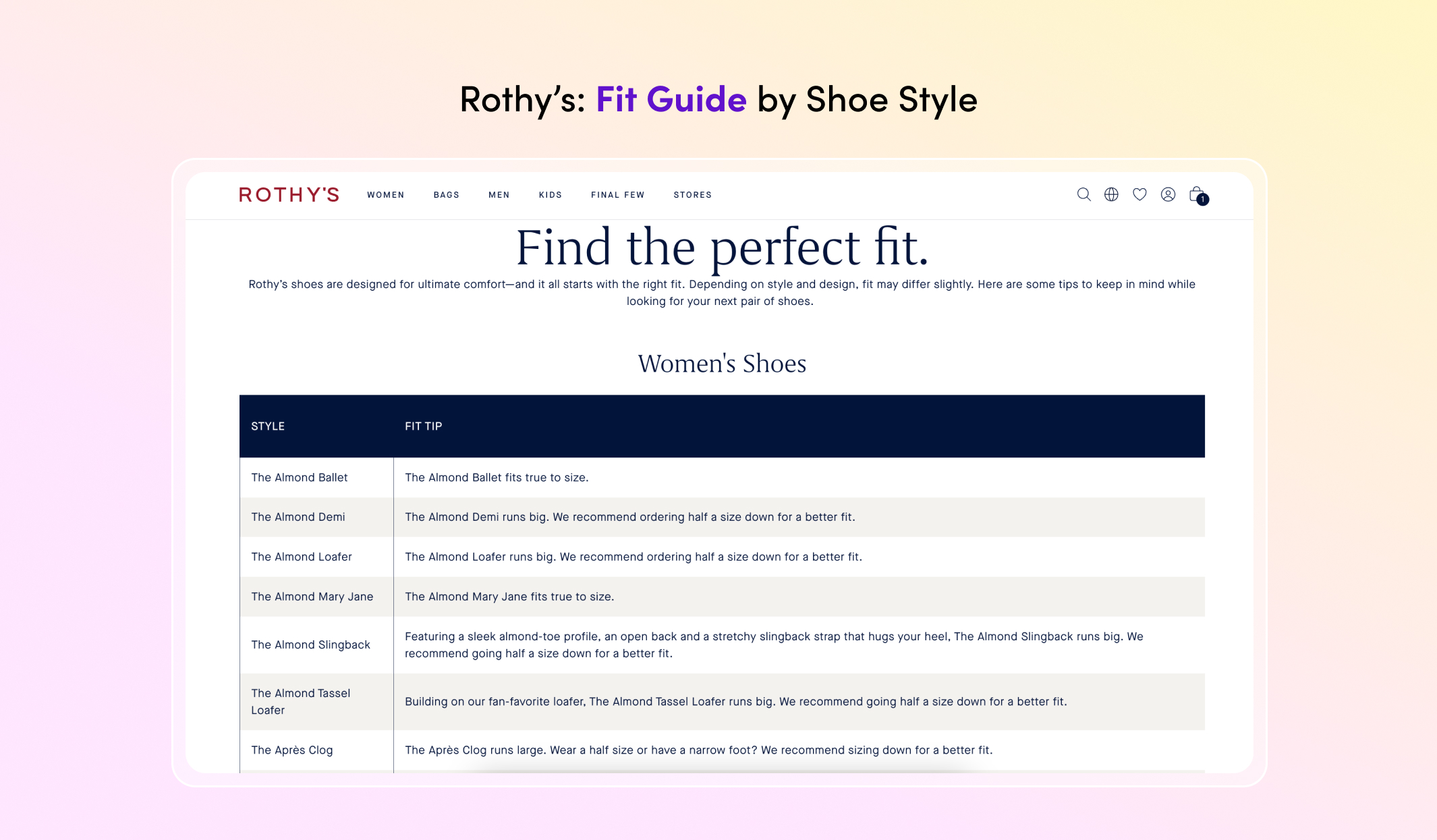
The Women's Penny Loafer page gives fit advice for that style, so shoppers can see whether to order their usual size or go up or down. Rothy’s also has a fit guide with a separate tip for each shoe. The Almond Ballet fits true to size, for example, while the Almond Loafer runs big and works better half a size down. The product page also lists international conversions, and reviews from buyers of the same style add more detail.
When styles fit differently, give separate advice for each one, both on the product page and in a single fit guide.
Jumpsuits are hard to size because several measurements must work together. A shopper may fit at the waist and hips but not in the torso.
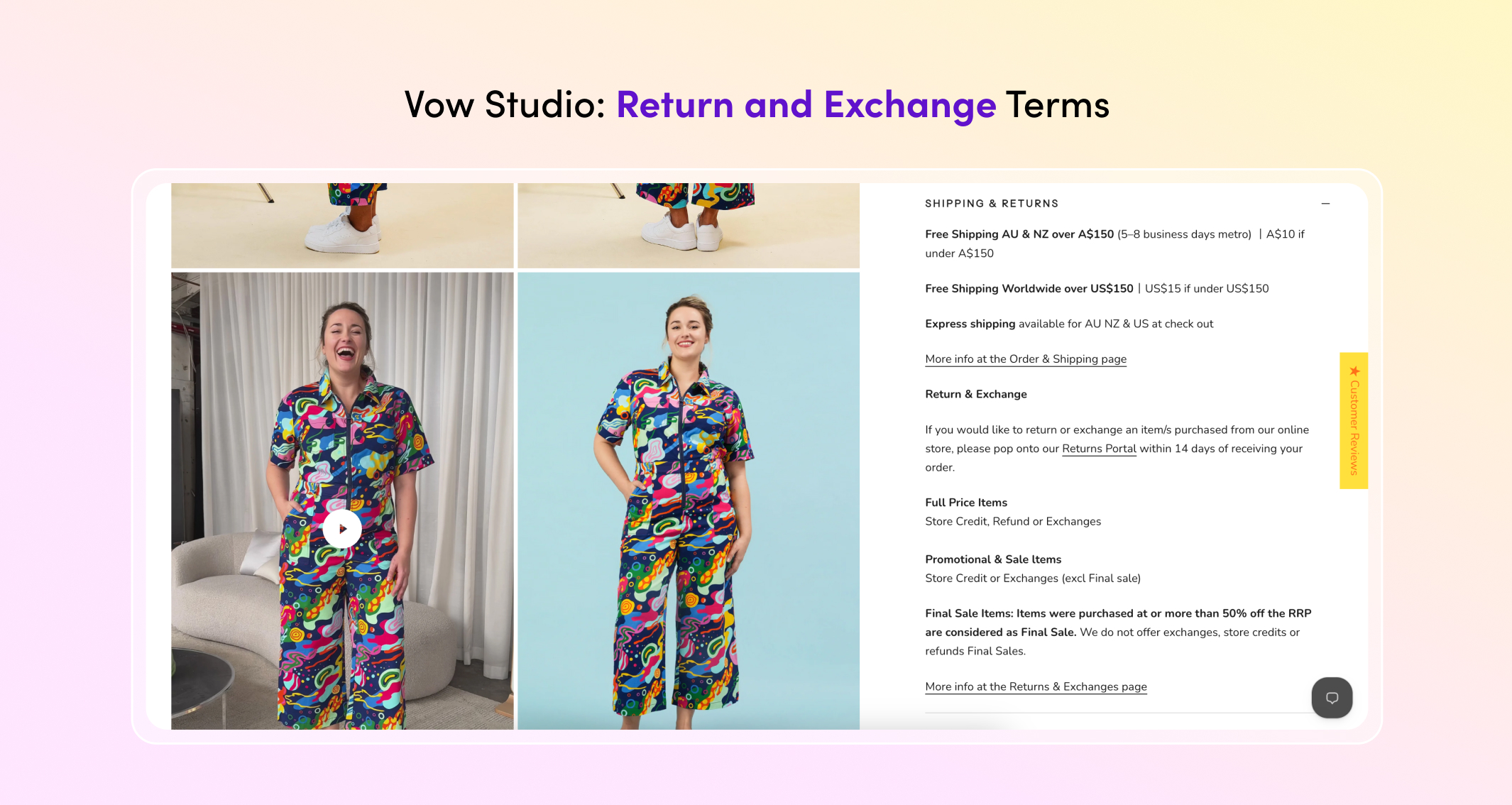
Vow Studio's Splash Jumpsuit lists garment measurements for the bust, waist, hips, torso, and full length, with both body and garment charts. The brand suggests sizing down for a fitted look and leaving 2 to 3 cm of room to move. The page also shows the model's height, measurements, and size worn.
The return policy is on the same page, and customers have 14 days after delivery to request a return or exchange. Each product allows one size exchange, and the replacement is final, so Vow Studio offers sizing help before that exchange.
Use garment measurements for products that must fit in several places, and explain how much room the garment has. Show the model's height and size worn, and keep the return policy close to the size options.
Pants and jeans are some of the hardest items to buy online. A customer may know their waist measurement, but the inseam, rise, and cut can vary from brand to brand. If one detail is off, the pair ends up too long, too tight, or too loose, and often gets sent back.
For Under 5'10, a brand that makes clothing for shorter men, the challenge is even bigger. Its Core Extra Stretch Jeans have a tapered cut and come in short inseams. Many of its customers are used to rolling up cuffs or paying a tailor, so length matters as much as the waist.
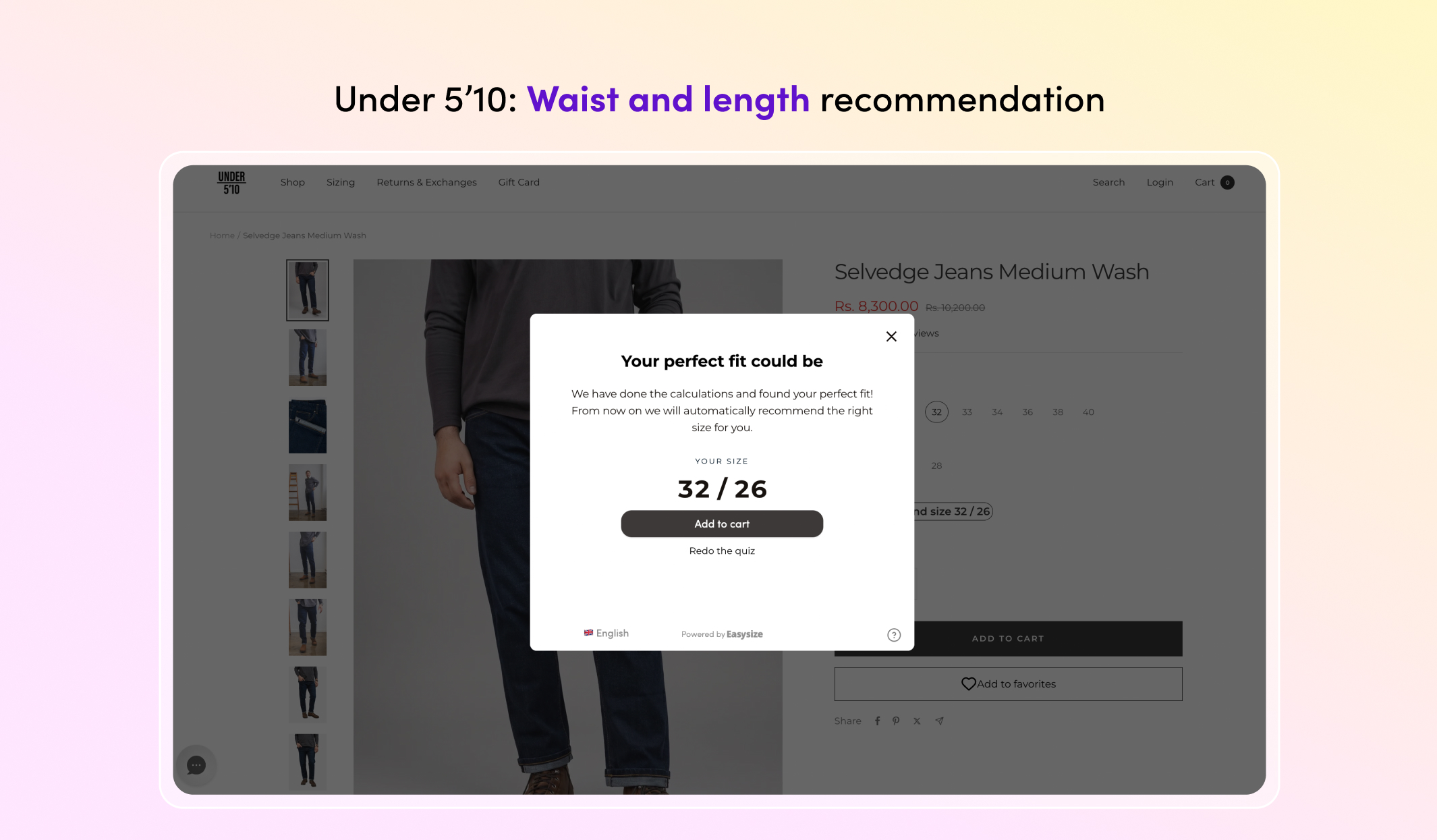
To make this easier, the brand added Fit Quiz to the product page as a "What's My Size" button. Shoppers answer a few questions about the pants they usually wear, their height, preferred fit, and body shape, then get a suggested waist and inseam. According to the Under 5'10 case study, people who followed the recommendation had a 30% lower return rate.
For pants and jeans, a waist size alone is not enough. A size recommendation that covers both waist and length helps shoppers choose the right pair in one step, instead of guessing one of the two. Track returns for shoppers who follow the recommendation to see if it works.
Bridesmaid dresses come with a deadline. Shoppers need time to get the dress, try it on, and arrange alterations or an exchange.
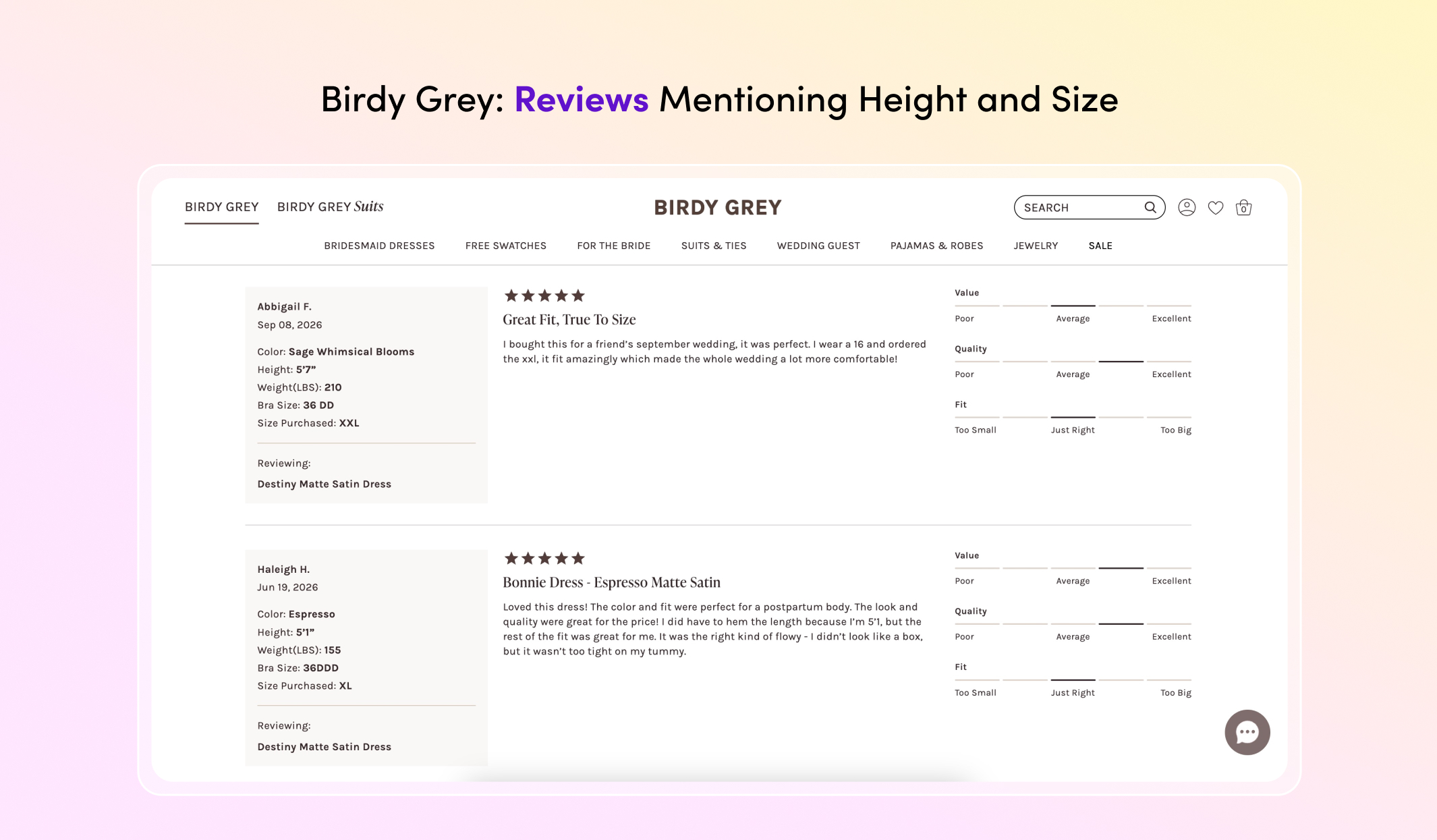
Birdy Grey's Destiny Matte Satin Dress has a size chart and customer reviews that show each reviewer's height and the size bought. Shoppers can filter reviews by height and size, and a summary shows whether others found the sizing accurate. The page also shows estimated delivery dates.
Eligible items have a 30-day return and exchange window. Made-on-demand dresses take longer to exchange, because a new dress has to be made.
For special-occasion clothing, show delivery times next to sizing and let shoppers filter reviews by height and size. For made-to-order items, explain how long an exchange takes.
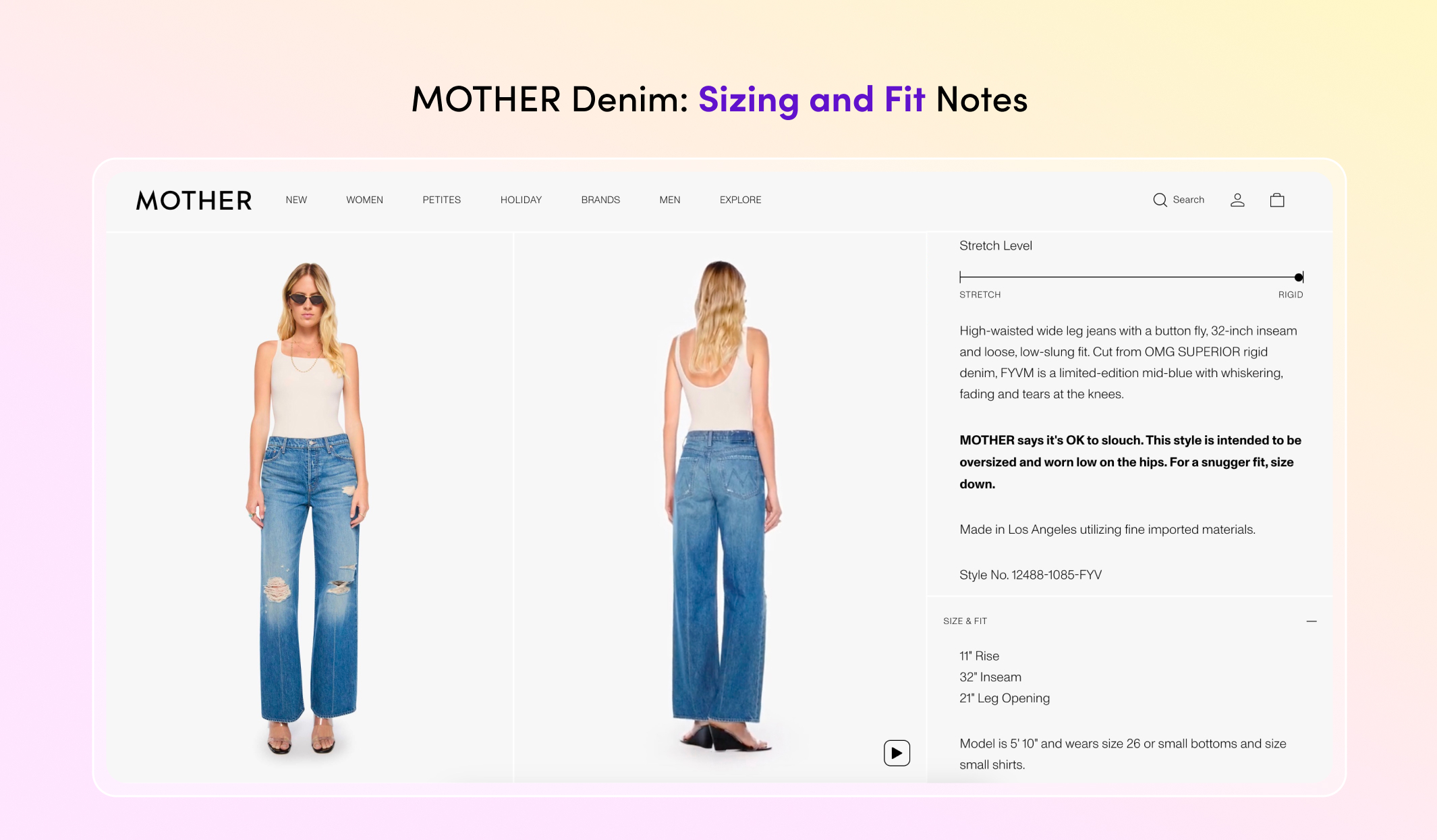
Two pairs of jeans with the same label can feel very different on the body. Fabric plays a big role, especially when the denim has no stretch.
MOTHER Denim's Rerun Zip Sneak jeans have an oversized, low-slung fit, and the brand suggests sizing down for a snugger fit. The page lists rise, inseam, and leg opening, plus the model's height and size worn. It also notes that the denim is rigid, which helps shoppers who usually wear stretch jeans.
Return costs are on the page too. Eligible US orders get free 30-day size exchanges if the customer keeps the same style and wash, and returns for store credit are also free. A refund to the original payment method costs $10 for shipping and processing.
Say when a product runs oversized or has little stretch, and list the measurements that matter, such as rise and inseam for denim. If exchanges are free but refunds cost money, make that easy to see.
These stores sell different products, but they share a few habits:
For more examples, read 4 Shopify Sizing Examples & How to Replicate Them or, to compare sizing tools, see Shopify Size Recommender vs. Size Chart.
Start with the products that get the most size-related returns. Read the return reasons and look for problems that repeat. If customers say a product runs small, say so on the product page.
Then check what shoppers see before they buy:
Return data shows where information is missing. If a product keeps coming back for the same reason, review its description and sizing notes. Stores that use Fit Quiz can compare returns for shoppers who followed a recommendation, chose another size, or did not use the quiz.
Shoppers should not have to guess whether to order their usual size. If jeans run big or a dress has little stretch, say so on the product page. Model details and reviews often answer questions a size chart cannot.
The same goes for returns. Tell shoppers how long they have, whether exchanges are free, and which sale items cannot be returned. Keep this on the product page so they can check it while they decide.


