Agentic commerce, where AI assistants search, evaluate, and purchase products on behalf of consumers, is quickly becoming a major shopping channel.
Working directly with hundreds of apparel and footwear brands and analyzing data covering the fashion habits of over 27 million shoppers across 3.5 million products, we have a front-row seat to how AI agents interact with retail. While the promise of agentic commerce is bold, the fashion industry is facing a uniquely complex set of challenges.
Here's where agentic commerce stands today, the misconceptions that are holding brands back, the challenges fashion has to solve for the AI-first future.
Right now, AI agents are mostly used for product research and discovery. It mirrors an age-old behavior: you walk into a store, describe what you need to a shop assistant, and get a tailored recommendation. Agentic commerce promises the same interaction but available digitally, 24/7, and across the globe.
Consumers are already adopting this behavior with 43% of U.S. online shoppers using ChatGPT, Gemini, Claude, Perplexity, or other AI assistants for product research. This behavior is already sending considerably more traffic from AI platforms to ecommerce stores. Adobe's latest report found that traffic from AI sources to U.S. retail websites increased 393% year over year during the first three months of 2026.
But there's an important caveat: 86% of those shoppers said they verified the AI recommendation through another source before making a purchase. The AI agent's job ends by redirecting a shopper to the merchant's storefront where they make the final decision and place the order.
Early attempts to build the end-to-end shopping journey inside AI platforms proved harder to scale than anyone anticipated. A few months ago, OpenAI dropped its native "Instant Checkout" feature and in-chat purchasing capabilities, doubling down on search and discovery instead and directing traffic back to merchant sites.
The ultimate vision of a completely frictionless in-agent journey from research to automated checkout to post-purchase has been slow to materialize. Customer demand has been growing steadily but the infrastructure and broad adoption just aren't there yet.
Today, many brands are setting a sharp increase in traffic originating from AI assistants without quite understanding how to capitalize on this growing trend. The common mindset is:
My store is online, my products are active, so AI agents will automatically find and recommend us.
This is a dangerous misconception. In our work across hundreds of apparel and footwear brands, we see that simply being "online" is nowhere near enough. AI agents don't browse websites the way humans do. They rely on structured data, clear semantic context, and technical site architecture. If your catalog and storefront aren't explicitly structured for machine readability, AI agents will skip your products in favor of brands whose data is easier to understand.
Structuring data for AI agents is relatively simple in categories like consumer electronics or home appliances. A phone or laptop can be easily described through a set of standardized attributes: storage space, battery life, screen dimensions. Fashion is a different problem entirely, and the data proves it. In Product.ai's report spanning 18 product categories, apparel stood out as an outlier. It had the highest research confidence among shoppers but the lowest trust in AI recommendations. This mismatch captures the fashion problem in a nutshell.
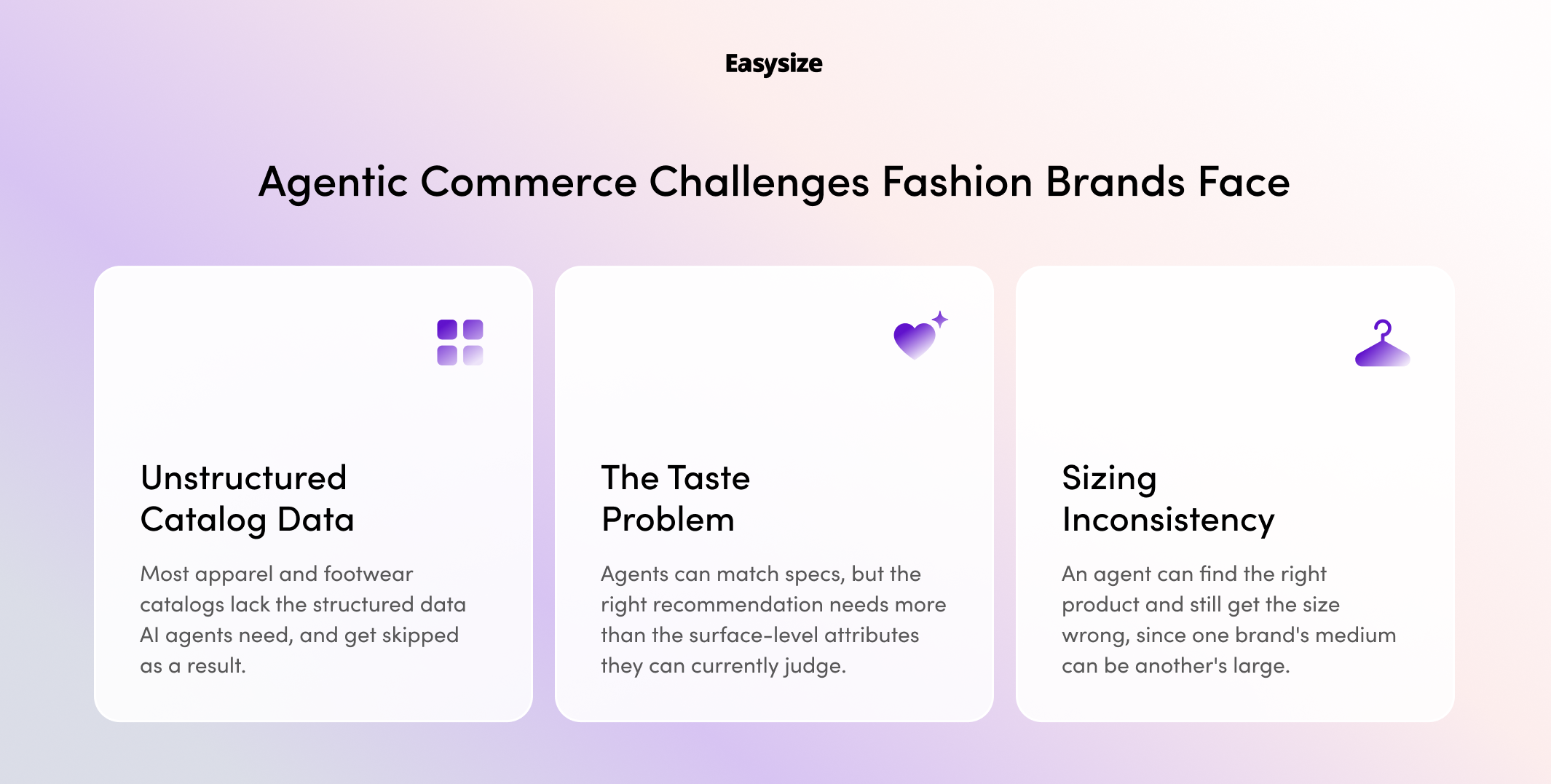
Basic attributes like color, size, and category sound simple, but in fashion e-commerce, they are notoriously inconsistent. In analyzing millions of products, we routinely find that the most apparel and footwear brands work with incomplete, missing, or non-standardized catalog metadata.
In addition, maintaining a well structured product catalog is especially difficult and resource-intensive, given high seasonality, fast inventory cycles, and trend-driven demand in the fashion industry.
Buying fashion is a fundamentally emotional decision based on aesthetics, trends, and personal style.
A consumer buying a laptop makes a decision largely based on standardized parameters, like technical specifications or price. The AI agent’s job is straightforward and the shopper’s behaviour is easy to predict. On the other hand, a consumer looking for a summer dress is influenced by subjective factors: packing for a trip to Italy, an influencer's recommendation, a specific floral pattern, a flattering A-line cut, sustainable fabrics.
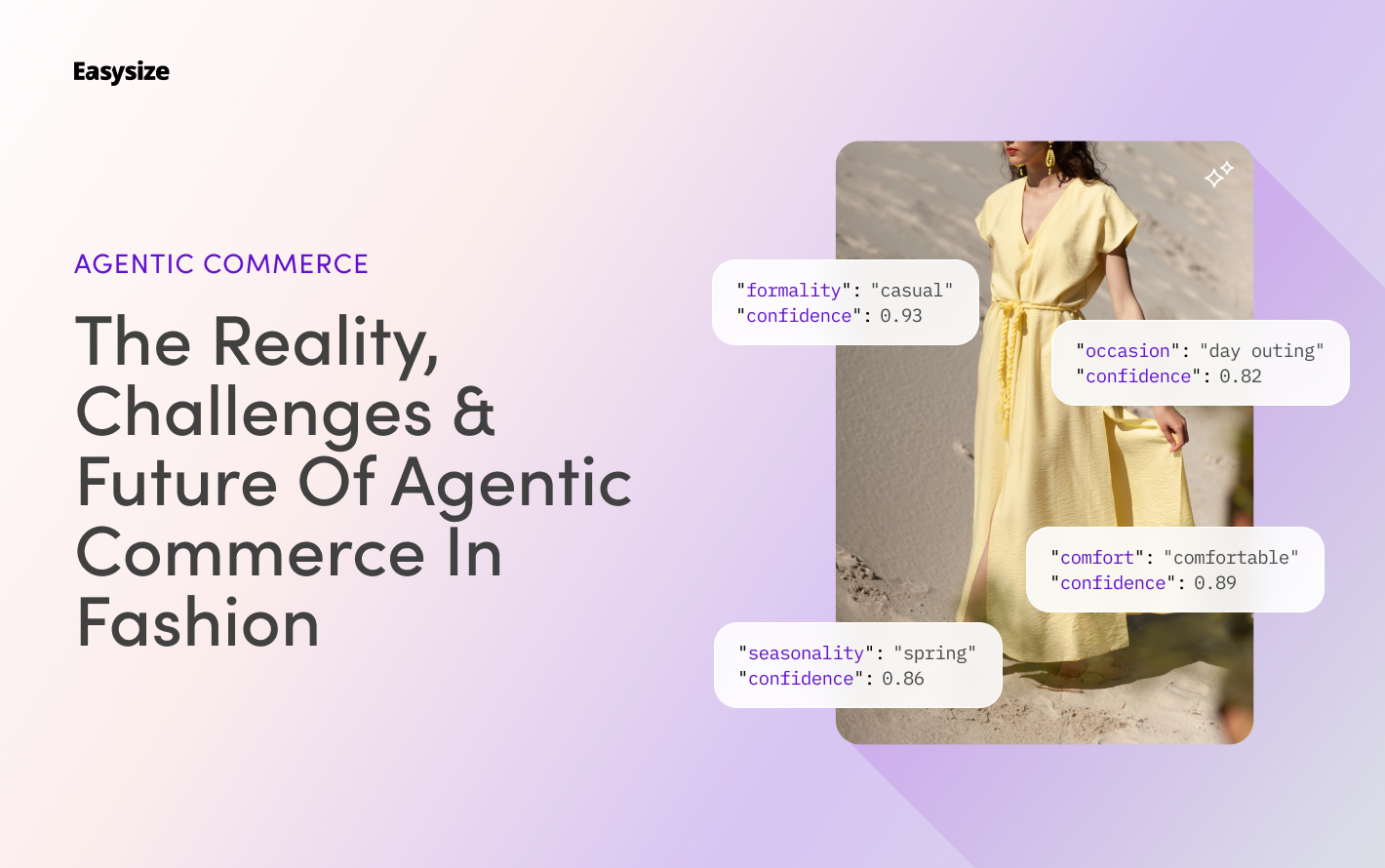
This creates an enormous number of options and combinations. In agentic commerce, it is known as the "Taste" Challenge. Think of it as the critical context that determines what a specific shopper will like in a given scenario. An AI agent cannot recommend the right fashion item using surface-level attributes alone. It must understand style, silhouette, fit, brand vibe, and visual context.
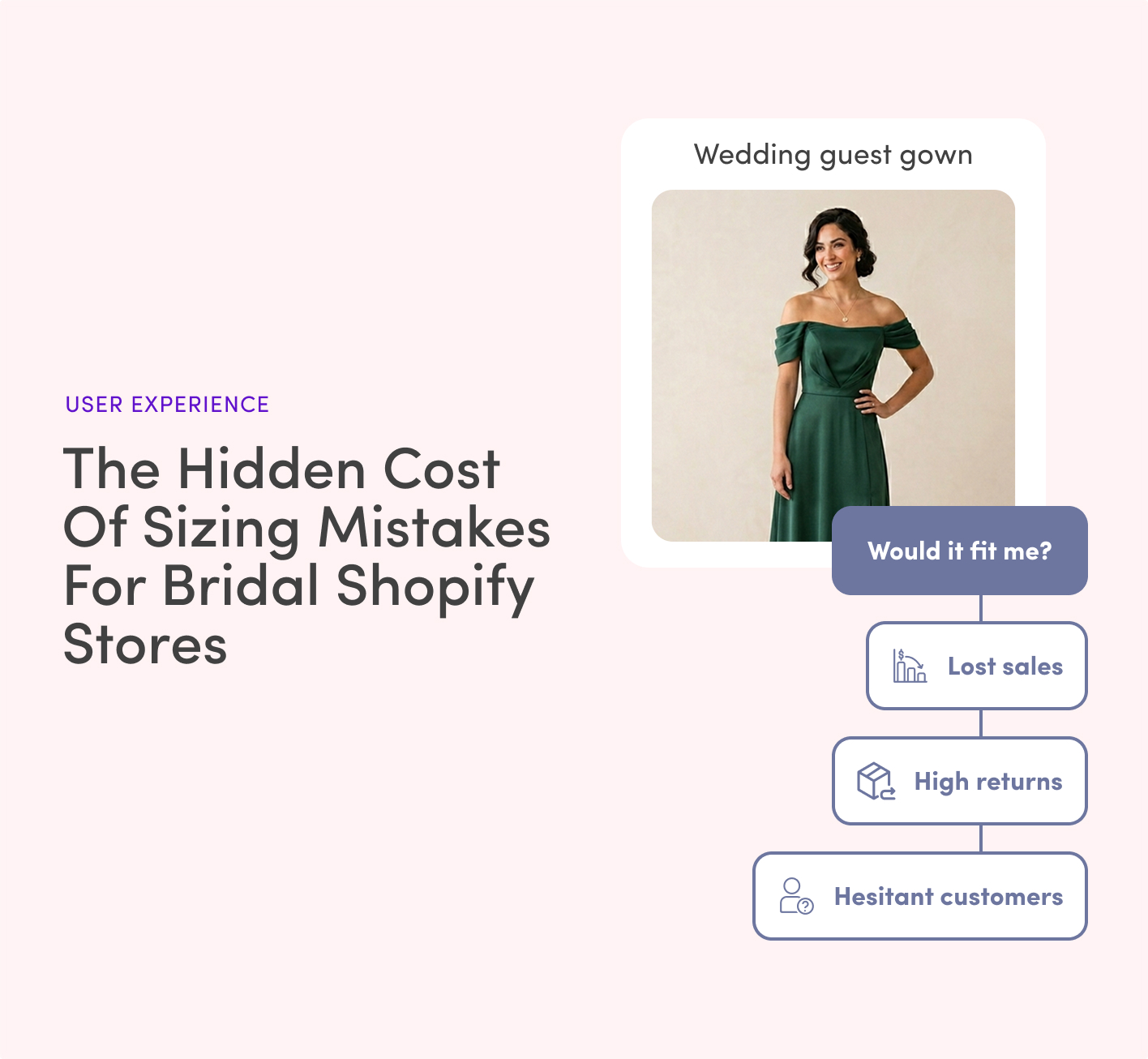
Fashion has another problem that receives far less attention in conversations about agentic commerce. An AI agent can find the perfect pair of jeans and still recommend a purchase that ends in a return if it cannot determine which size the shopper should buy.
Sizing is not standardized across fashion. “Medium” from one brand may fit completely differently from a “Medium” sold by another, and even products within a single brand can fit differently depending on cut, fabric, construction, stretch, and intended silhouette. Footwear brings the same inconsistencies, with differences in length, width, shape, and between individual styles. Shopper preference complicates things further, since two people with similar characteristics may deliberately choose different sizes: one preferring a relaxed fit, the other something more fitted.
An AI shopping assistant therefore needs to answer two separate questions: will this shopper like the product, and which fit and size in that product should they buy? Solving the first without solving the second only gets fashion brands part of the way there. For agentic commerce to work well in apparel and footwear, product discovery, personal taste, and size and fit intelligence eventually need to work together.
Neither problem is unsolvable, but both require intention.
Fixing the catalog starts with structured metadata and machine-readable storefronts. Clean schema, standardized categories, and rich product descriptions give AI agents the explicit signals they need to find and understand your products instead of guessing.
Solving the "taste" challenge goes further than catalog fixes. With the fashion e-commerce space already generating hundreds of billions in revenue, the brands that win will be those that turn subjective human taste into structured, actionable data.
Accurately predicting what consumers will actually buy requires AI models trained on diverse, domain-specific shopper data. That's going to be the difference between an agent that recommends a "relevant" product and one that recommends a product someone actually wants to wear.
Today, agentic commerce is fundamentally reshaping how consumers discover products. Adoption will keep growing as the technology matures, and over time AI agents will likely manage the entire shopping journey: from discovery to checkout to post-purchase. But no brand gets there alone. Tech platforms and brands have to tackle fashion's unique challenges together. The brands that win this new era of retail will be the ones that bridge the gap between structured data and genuine human taste.
Being present in the agentic world isn't the finish line. It's barely the starting point.