

AI shopping assistants are changing where product discovery starts for fashion brands on Shopify. A shopper may now meet a product in ChatGPT, Gemini, Microsoft Copilot, or another AI shopping experience before they ever visit the brand’s website.
For Shopify apparel and footwear merchants, that puts more pressure on the information on the storefront. If product data is vague, inconsistent, or incomplete, an AI assistant has less to work with when deciding whether a product will show up in a recommendation.
Shopify Agentic Storefronts make eligible products available across AI shopping channels, including ChatGPT, Google AI Mode and Gemini, Microsoft Copilot, and Meta.
ChatGPT shows how different this journey can look from a traditional ecommerce visit. A shopper can ask for a recommendation, discover a Shopify product inside the conversation, and then continue to the merchant’s storefront to complete the purchase. According to OpenAI’s Shopify shopping documentation, Shopify products can appear in ChatGPT while checkout currently happens on the merchant’s online store.
For brands, the important part is what happens before that click. The product has already been filtered and evaluated by an AI system before the shopper reaches the PDP.
Because of that, the role of product information changes. Titles, descriptions, attributes, imagery, variants, pricing, availability, fit, and sizing are no longer useful only once someone lands on the store. They increasingly influence whether the product gets surfaced from a prompt in the first place.
Fashion catalogs tend to get inconsistent over time for a variety of reasons. The store will often have different teams add products; naming conventions will inevitably change; seasonal collections come and go; and similar items end up being described in different ways.
All of that creates problems for AI systems trying to compare products across the catalog.
Product category, color, material, size, price, availability, variants, and other core attributes should be as accurate and consistent as possible. Important details about fit, fabric, construction, or use should not be buried where they are difficult to interpret.
Shopify Catalog increasingly plays a role in how this information is made available to supported AI shopping channels. Shopify recommends keeping titles, descriptions, images, categories, variants, options, prices, and inventory complete and accurate so its systems have better information to work with.
Structured markup still matters on the storefront as well. JSON-LD and other structured data should match what the shopper actually sees on the product page.
The practical test is simple. If a shopper asked a specific question about this product, is the answer actually present somewhere AI can understand?
A description like “beautiful cotton summer dress with a flattering fit” may sound perfectly reasonable on a PDP. It does very little to explain why that dress should be recommended over 50 others.
A shopper may care about whether the fabric stretches, how fitted the waist is, where the hem falls, whether the material is lightweight, how sheer it is, or whether the silhouette works for a particular occasion.
Those details help shoppers make decisions, and they give AI systems more context when comparing products.
This does not mean every product page needs a long technical description. It does mean the copy should contain enough specific information to distinguish the product from similar items.
For apparel and footwear brands, details about fabric, fit, length, construction, stretch, silhouette, width, intended use, and occasion can be far more useful than another line of generic lifestyle copy.
Standardizing the catalog is closely related to improving product data, but it merits attention in its own right.
Take color as an easy example. A shopper probably understands that midnight, deep navy, dark blue, and ink could all describe roughly the same part of the color spectrum. An AI system still has to decide whether those differences are intentional or simply inconsistent naming.
The same problem appears across product types, materials, collections, and other repeated attributes.
Reviewing those areas does not require turning every product into the same template. Fashion still needs merchandising language and brand personality. The underlying information just needs enough consistency for similar products to be understood as similar. This is especially important for merchants with large catalogs where product information has accumulated across multiple seasons or teams.
Fashion has always depended heavily on images, but AI shopping makes those images useful earlier in the discovery process. A photo can show details that are difficult to capture in a product title or short description. The photo or video can communicate how a fabric drapes, how wide a trouser leg is, where a dress falls, how a shoe is shaped, or whether a garment looks relaxed or structured.
That makes product photography part of the information AI systems can use to understand the item.
Brands should ensure product pages include enough useful information to convey those details and that alternative text accurately describes what is shown. Campaign imagery still has value, but it should not be the only visual information available.
Shopify’s Spring 2026 updates continue to expand the infrastructure developers can use for richer AI-powered product discovery, including visual and multimodal experiences.
For fashion brands, this is one of the areas I would expect to become more important sooner rather than later.
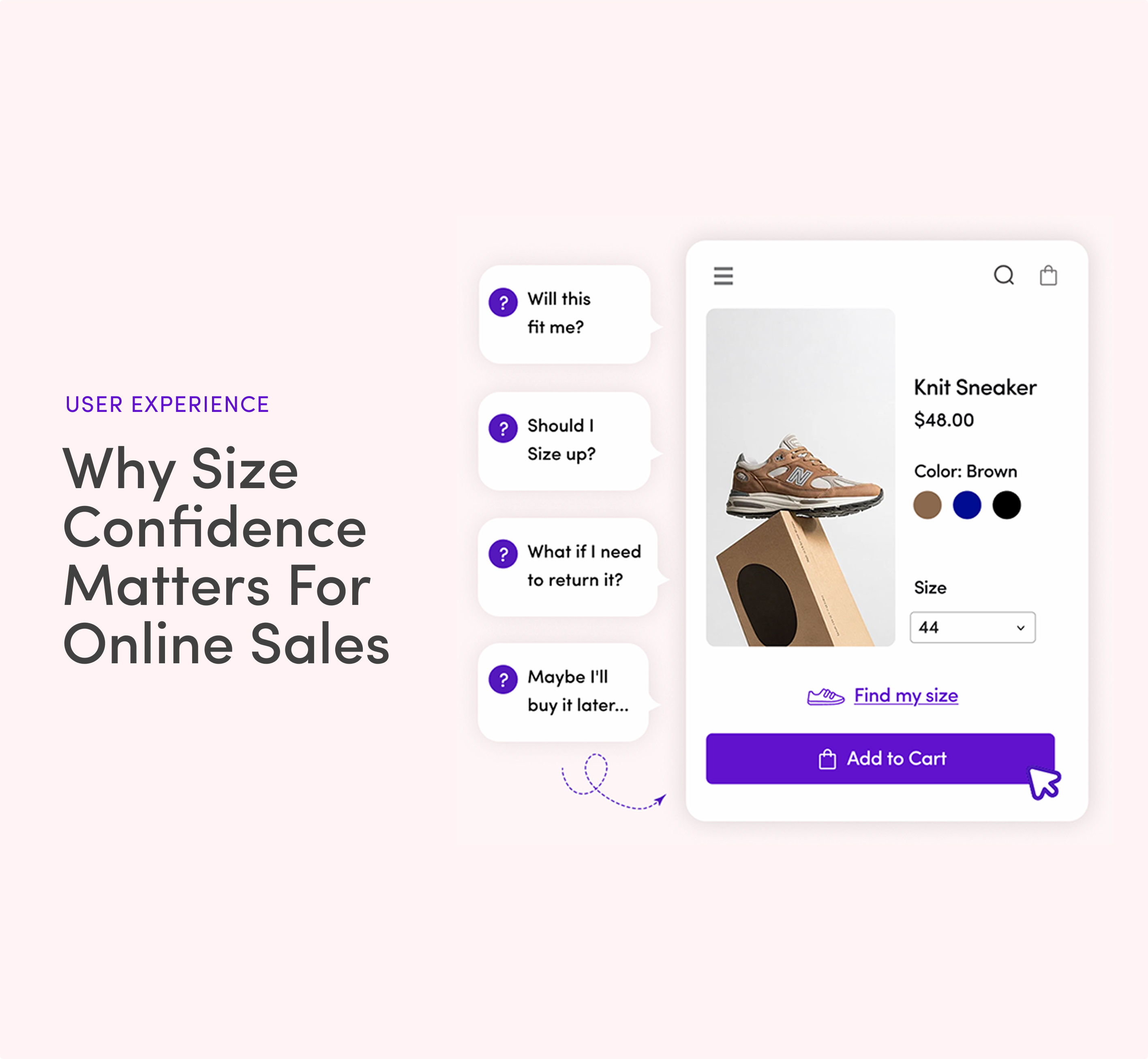
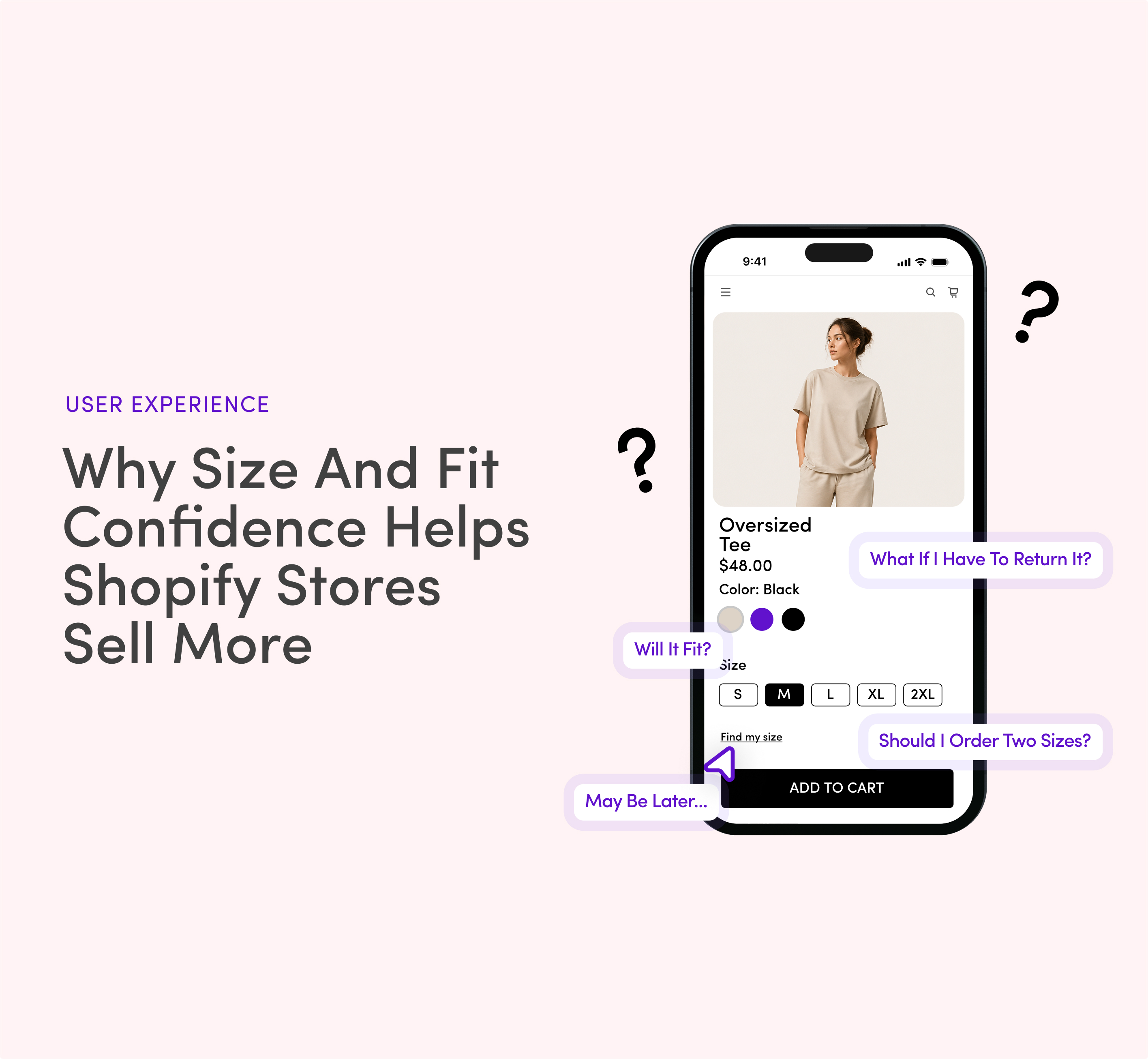
AI may help someone find the right pair of jeans, but that does not mean they know which size to order. A traditional size chart gives measurements. It does not always explain how an individual product fits. One style may run small, whereas another may have more stretch. A relaxed silhouette may be intentionally oversized based on the latest collection. Two shoes from the same brand may fit differently because of width, shape, or construction.
This is where product-specific fit information becomes much more useful. Brands should look at whether the PDP actually helps someone choose a size in that particular item. Information about stretch, cut, width, length, intended silhouette, and how the product runs can make that decision much easier.
For Shopify brands using size recommendation technology such as Fit Quiz Size, this is also where recommendation data becomes especially relevant. AI may introduce the shopper to the product, but the size recommendation still needs to help turn that discovery into a purchase the shopper is likely to keep.
That is a much more practical way to think about agentic commerce in fashion. Discovery may move upstream into AI, but fit still has to be solved before the shopper reaches the checkout.
Shopify is putting significant infrastructure behind agentic commerce. It’s been the theme of 2026, and isn’t going away any time soon.
Shopify Catalog organizes product information that supported AI channels can use for discovery, comparison, ranking, and recommendations. Catalog API gives developers access to the product discovery layer and enables them to build more AI-powered commerce experiences on top of Shopify’s product data.
The Universal Commerce Protocol, or UCP, covers more of what happens after discovery. Shopify co-developed UCP with Google as an open standard for how AI agents and commerce systems can interact across shopping experiences, including carts and checkout.
Shopify also opened more of this infrastructure to developers in its Spring 2026 Edition. For app developers and other partners, this creates more room to build directly into the systems that support AI shopping rather than treating it as a separate channel.
Merchants are beginning to see more of this inside Shopify Admin as well. Agentic Storefronts can be managed there, and Shopify has introduced reporting around traffic, sales, and AI shopping queries, including information about which queries products rank for and where product data may need improvement.
That reporting is worth watching closely. It gives merchants something they have not really had before: a clearer view of how products are interpreted and surfaced across AI shopping experiences.
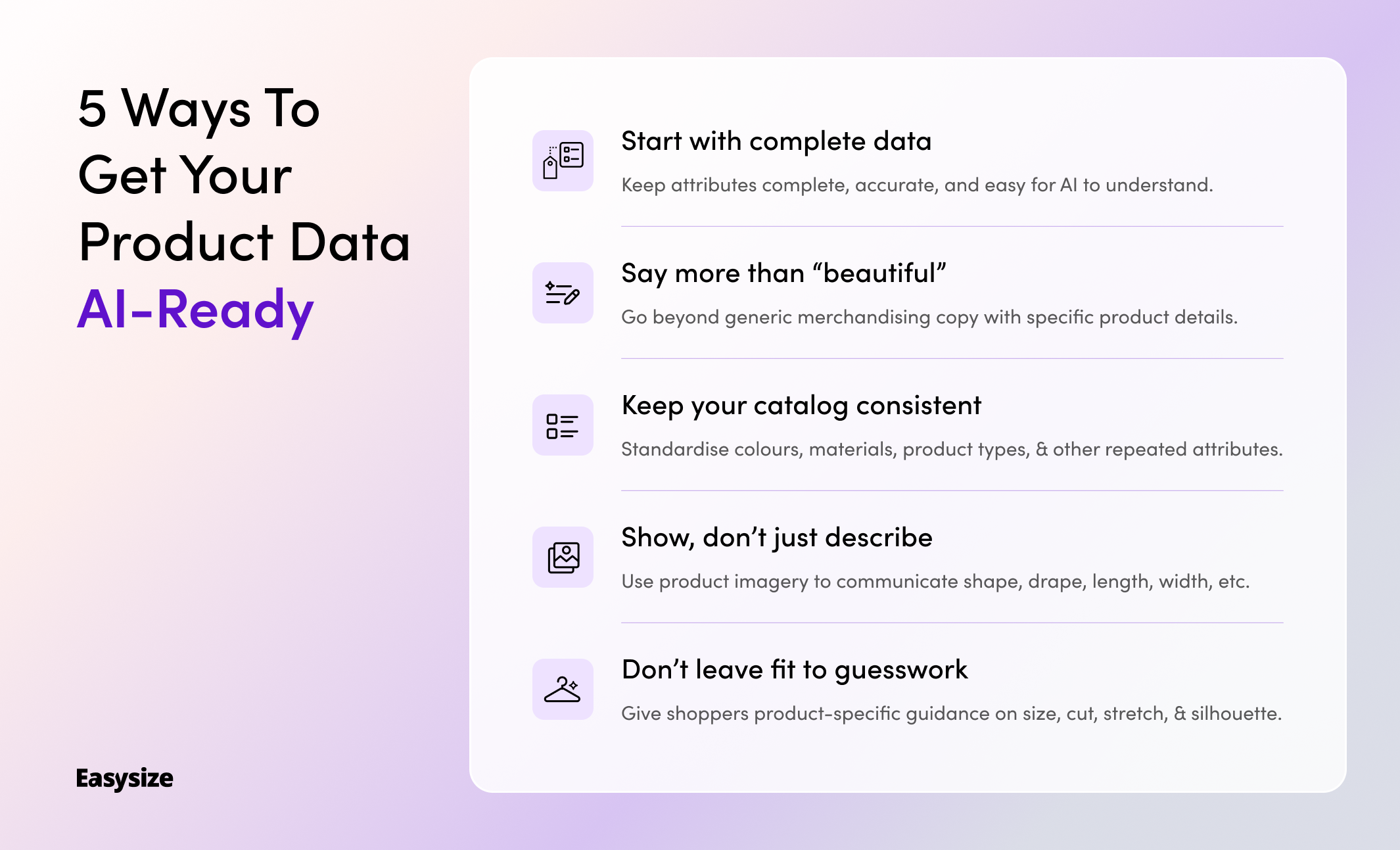
A good place to start is your current catalog.
Look at the product attributes that have become inconsistent. Review the descriptions that rely too heavily on generic merchandising language. Make sure product imagery shows the details shoppers actually use to make decisions. Then look closely at how much useful fit and sizing information is available on the PDP.
None of this requires predicting exactly how agentic commerce will develop over the next few years. Shopify is already building the channels, infrastructure, and reporting that make AI-driven discovery more visible to merchants. Start with the things you can easily update today, and continue working on them as you follow the latest tools and developments alongside Shopify.
The immediate job for fashion brands is to make sure the information those systems read is both good enough to earn the recommendation and useful enough to help the shopper complete the purchase.




.jpg)


.jpg)


